Also known as: oats, whole oats, rolled oats, crimped oats
Oats are the classic workhorse grain — your horse will hear the scoop rattle from three paddocks away and practically vibrate with excitement. Nutritious, digestible, and time-tested, oats have fueled horses from ancient warhorses to modern champions.
Feed clean, dry, mold-free oats only. Crimped or rolled oats are easier on older horses or those with dental issues. Introduce gradually if your horse is new to grain to avoid digestive upset.
Typical feeding rate is 0.5–1.5 kg (1–3 lbs) per feeding for a 500 kg horse, depending on workload. Hard-working horses may receive up to 3–4 kg per day split across 2–3 meals. Always feed alongside ample forage — hay or pasture should make up the bulk of the diet.
Oats have a lower starch content and higher fiber than corn or barley, making them one of the safest cereal grains for horses. They're often called a "cool" feed compared to corn, though the "hot feed" concept is more myth than science — caloric load matters more than grain type. Horses with metabolic syndrome or insulin resistance should have oats limited or eliminated.
* Good source of digestible energy — ideal fuel for working horses without the blood sugar spike of corn
* Contains beta-glucan fiber, which supports gut health and slows starch digestion
* Provides B vitamins including thiamine (B1) and niacin, supporting nerve function and coat health
* Decent source of phosphorus for bone health (though calcium supplementation is usually needed to balance the Ca:P ratio)
* Moderate protein content (~12%) with a reasonable amino acid profile compared to other cereal grains
1. Whole oats — traditional, slightly harder hull but horses generally handle it fine
2. Crimped oats — hull is cracked open for better digestibility, a great middle-ground option
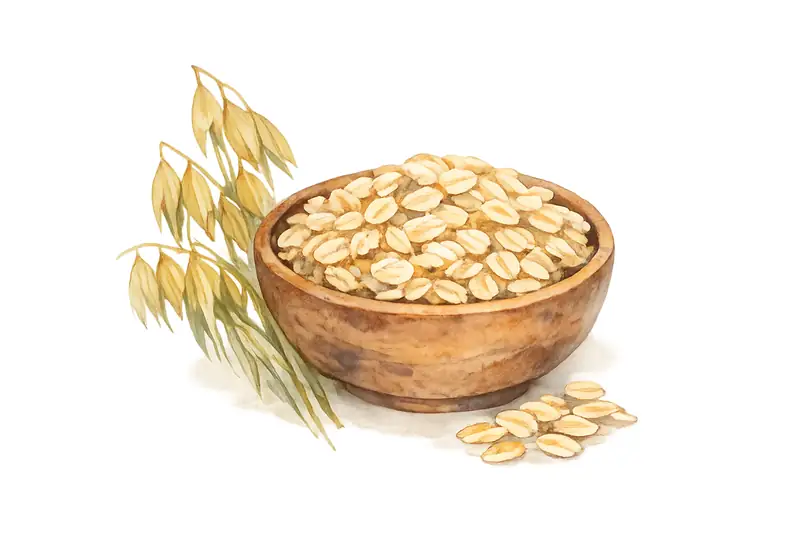
3. Rolled oats — flattened for easier chewing and digestion, good for older horses or those with worn teeth
4. Naked oats (hulless oats) — higher energy and protein density with lower fiber; feed in smaller quantities
5. Steamed/micronized oats — processed for maximum digestibility; useful for horses with poor gut function
Light-work horses (trail riding, light hacking): 0.5–1 kg per day, split into 2 meals alongside free-choice hay.
Moderate-work horses (regular arena work, endurance conditioning): 1–2 kg per day across 2 meals.
Heavy-work horses (competition, racing, heavy hauling): 2–4 kg per day in 2–3 meals; adjust based on body condition.
Always introduce new grain over 7–10 days and never exceed 2 kg of starch per feeding to keep the hindgut happy.
* Maintains or improves body condition score with appropriate workload
* Coat looks glossy and healthy after consistent feeding
* Good energy and willingness under saddle without spooky or "fizzy" behavior
* Normal manure — well-formed, not too loose or too dry
* Loose manure or signs of digestive upset shortly after feeding — reduce quantity or switch varieties
* Sudden changes in behavior (excessive energy, spookiness, irritability) — check total caloric load
* Weight gain beyond target body condition — cut back on grain and increase forage and exercise
* Reluctance to eat or leaving oats in the bucket — check for dental issues or illness
Processing oats (rolling, crimping, steaming) breaks the fibrous hull and increases starch availability by roughly 15–20%, making more energy accessible per kg fed. Whole oats are still highly digestible in horses — more so than in ruminants — so unless your horse has dental problems, whole oats remain a perfectly valid choice.
Horses are natural grazers designed to trickle-feed over 16–18 hours a day, so grain meals that disappear in minutes can leave them mentally frustrated. Slowing down grain delivery with enrichment tools mimics natural foraging behavior and reduces the risk of stable vices like cribbing or weaving.
Easy: Scatter a small handful of oats in a pile of hay so your horse has to forage and pick them out — slow feeding at its simplest.
Medium: Use a feed ball or slow-feeder bucket for the grain portion of the meal; your horse will push it around to release oats a few at a time.
Hard: Hide small amounts of oats in several piles of hay or in multiple slow-feeder stations around the paddock and let your horse work the whole area — a horse-sized treasure hunt.
Q: Do oats really make horses "hot" or hyper?
A: The "hot feed" myth has been galloping around barns for generations, but the science doesn't back it up. What makes a horse excitable is excess digestible energy — too many calories for their workload — not the grain type itself. Oats are actually one of the lower-starch cereal grains available. A horse fed appropriate quantities of oats for their work level should stay calm and level-headed. If your horse is acting like they've had three espressos, check the total daily calorie load first.
Q: Can I feed oats to a horse with laminitis or insulin resistance?
A: This one's worth a vet conversation. Oats do contain starch, and horses with metabolic conditions like Equine Metabolic Syndrome (EMS) or Insulin Dysregulation need low-starch diets to manage blood sugar spikes. If your horse has a history of laminitis, it's generally safer to skip grain entirely and work with your vet on a forage-based diet with appropriate supplementation. Naked oats in particular are higher in energy density and should be used with caution in metabolically sensitive horses.
* Barley — higher starch content than oats, more energy-dense but harder to digest; usually needs processing; not the best first choice for grain-sensitive horses
* Corn — very high starch and calorie density; effective for putting weight on underweight horses but carries higher laminitis risk; use carefully and sparingly
* Beet pulp — excellent high-fiber supplement for adding calories without the starch spike; a great pairing alongside oats for horses needing more energy
* Timothy hay pellets — low-starch forage alternative for adding gut fill and fiber; no grain energy but useful for metabolically sensitive horses who need volume without starch
Oats are one of the safest grains for horses but should always be fed in appropriate quantities relative to body weight and workload — overconsumption can contribute to digestive upset, laminitis, or unwanted weight gain. If your horse has any history of metabolic issues, laminitis, or insulin resistance, consult your veterinarian before adding grain to the diet.