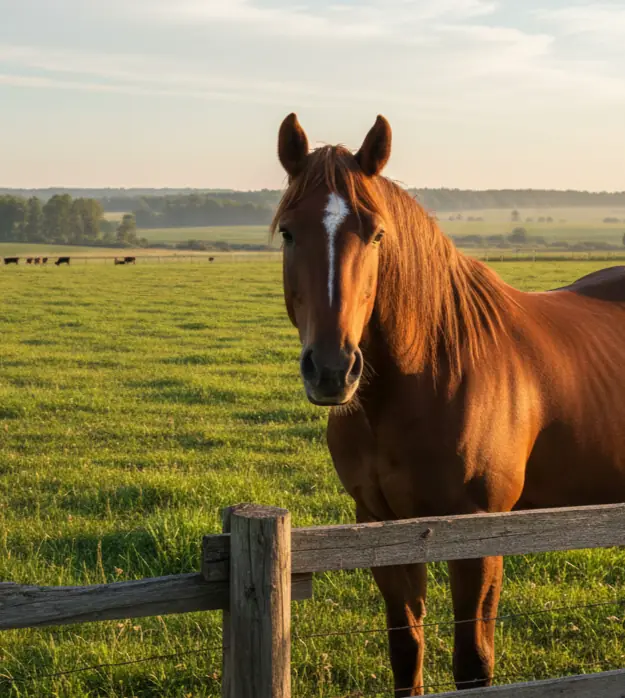
A calorie-dense warm slurry for hard keepers who lose weight the second they feel a cold breeze.
The night before: Put 200g of barley in a small bucket and cover with warm water. Leave it on the feed room counter overnight. By morning, the grains will be swollen, split, and soft. This is the only step that requires planning ahead.
At feeding time, dump the beet pulp and oats into your large feed bucket. Pour in about 3 liters of warm water — properly warm, like a bath you'd step into. Stir once and let everything soak for 15-20 minutes. Go fill hay nets, break ice off water troughs, do winter barn things.
Come back and drain the overnight barley, then stir it into the soaked beet pulp and oats. Chop the apple and toss it in. Drizzle the flaxseed oil over everything and stir until the whole mass glistens. Add a splash more warm water if the consistency is too thick — you're aiming for a flowing porridge that pours slowly, not a stiff paste.
Carry it to the stall while it's still steaming. Your horse will hear the bucket and be waiting with their head over the door, nostrils flaring. Set it down, step back, and watch six liters of warm calories disappear in about eight minutes flat.
Evening feed, daily through winter
Some horses just look at winter and lose weight. Their metabolism cranks up trying to stay warm, they burn through calories faster than you can shovel them in, and by February they look like a coat rack with a mane. This drench is a calorie bomb disguised as a warm, comforting evening meal — dense with slow-burning energy from fat and fiber, soaked to maximize absorption, and served warm because cold horses drink less water and dehydrated horses digest less feed. It's a vicious cycle, and this recipe breaks it.
For hard keepers, Thoroughbred types, seniors, and any horse that drops a body condition score the moment the temperature hits freezing. Start feeding at the first sustained cold snap and continue through winter until pasture comes back in spring. This is not a treat — it's a strategic calorie delivery system.
A thick, steaming, porridge-like slurry the color of dark oatmeal, glistening with oil. It smells like a warm grain room on a cold morning — earthy, sweet, and deeply comforting. Your horse will hear you stirring the bucket from across the barn and start banging the stall door. They'll plunge in muzzle-first and eat with an urgency that tells you everything about how hungry a hard keeper really is in winter. The bucket will be licked spotless and then licked again just in case.
Won't compensate for inadequate hay. A horse needs 2-2.5% of body weight in forage daily just to fuel their internal furnace. If the hay net is empty by midnight, no amount of drench will keep weight on. Fix the hay first, then add this.
Visible weight improvement within 2-3 weeks. Full body condition recovery (going from a 3/9 to a 5/9) takes 6-8 weeks of consistent feeding plus adequate forage.
This is a high-calorie recipe designed for hard keepers who are actively losing weight. Do NOT feed this to easy keepers, ponies, or metabolically sensitive horses — the calorie load can trigger laminitis, obesity, or metabolic crisis in horses that don't need it.
Never feed unsoaked barley. Dry barley grains can cause severe impaction colic. If you forgot to soak the barley overnight, skip it entirely for that feed and add extra oats instead.
Build up to the full oil quantity over 7-10 days. Starting at 90ml from day one will cause diarrhea and your horse will lose more fluids than they gain — the opposite of what you want.
Easy: Serve the drench in a wide rubber tub on the stall floor so your horse can eat at ground level — natural position, better for digestion, and they can really get their muzzle in there.
Medium: After the drench, hang a full slow-feeder hay net so your horse transitions from warm mash to long-stem forage — the combination maximizes gut heat production through the night.
Hard: On milder winter evenings, serve the drench in a paddock bucket alongside a hay pile so your horse alternates between warm mash and hay while moving around — gentle exercise plus maximum calorie intake.
Weigh your horse weekly with a weight tape through winter. Track the numbers. Hard keepers can lose 20-30kg before it's visible under a winter coat — by the time you can SEE the ribs, you're already behind. The tape doesn't lie.
Pair this drench with unlimited hay access overnight. A horse's hindgut produces heat during fermentation — it's their internal furnace. If the hay runs out at midnight, the furnace goes cold and they burn body fat to stay warm. Keep the hay coming.
If your horse is in work during winter, increase the oats by 100-200g on training days. Recovery in cold weather requires extra fuel because the body is simultaneously repairing muscle AND maintaining core temperature.
Consider adding a vitamin E supplement (1000 IU natural vitamin E daily) when feeding this much oil long-term. High omega-3 intake increases the body's vitamin E requirements.
This recipe is for winter survival, not year-round feeding. When spring grass returns and night temperatures stay above 10°C consistently, taper down over two weeks by reducing portions 25% every few days. Slamming the calorie brakes is just as bad as slamming the accelerator.