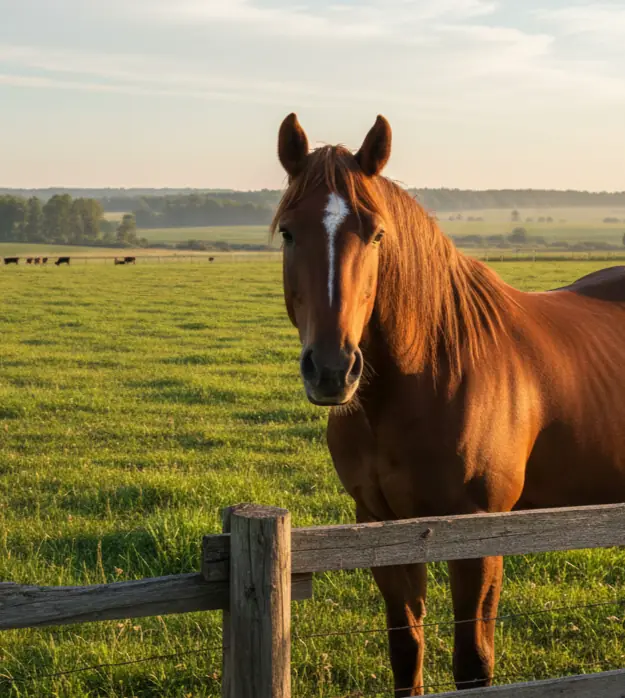
A hoof-building powerhouse for horses going shoeless — because strong bare hooves aren't born, they're fed.
Dampen the oats with a splash of warm water in a feed bucket — just enough to make them slightly sticky so everything adheres instead of settling to the bottom.
Lightly crush the pumpkin seeds in a zip-lock bag with a rolling pin or the bottom of a mug. You want them cracked, not powdered — chunky pieces that your horse will actually absorb.
Dice the carrots and apple into small, uniform cubes. Toss them into the bucket with the oats and crushed pumpkin seeds. Stir.
Drizzle the flaxseed oil over everything and stir until the mix is evenly coated and glistening. It should look like a rustic, nutty trail mix that you'd almost want to eat yourself. Almost.
Serve on top of the morning feed or as a standalone bucket. This is a daily commitment — hoof growth is a marathon, not a sprint. Set a 6-month calendar reminder and don't stop early.
Morning feed, daily
Pulling shoes is the easy part. Growing a hoof wall strong enough to handle life without steel? That takes months of targeted nutrition. This daily topper delivers the exact building blocks your horse's hooves need to grow thick, dense, resilient horn — biotin, zinc, copper, methionine, and the omega fatty acids that keep the hoof wall flexible instead of brittle. Think of it as construction materials for the tiny hoof factories growing 6-8mm of new wall every month.
Start feeding the day the shoes come off (or ideally 4-6 weeks before). Continue for at least 6 months — that's how long it takes for a full new hoof capsule to grow from coronary band to ground. Also excellent for any horse with weak, crumbly, or cracking hooves regardless of whether they wear shoes.
A chunky, nutty-smelling mix with visible seeds and dark, oily grain. It looks like artisanal horse granola. Your horse will nose through it strategically, picking out the pumpkin seeds first (they always do), then hoovering up the rest. The bucket will be polished clean.
Won't repair existing cracks or chips in the current hoof wall — that damaged hoof has to grow out completely. This feeds the NEW growth coming in from the top. Patience is non-negotiable.
New, stronger hoof growth visible at the coronary band within 6-8 weeks. Full hoof capsule replacement takes 8-12 months depending on growth rate.
For horses with insulin resistance or a history of laminitis, drop the apple entirely and reduce oats to 200g. Laminitis is a hoof emergency — you can't strengthen hooves if the laminae are inflamed. Work with your vet on the right nutrition plan.
Monitor the calcium-to-phosphorus ratio if feeding pumpkin seeds daily. Ideally supplement with a calcium source (like alfalfa) to keep the ratio between 1.5:1 and 2:1.
Introduce this gradually over 5-7 days, starting at half portions. Sudden diet changes are the fastest way to cause digestive upset in a horse.
Easy: Scatter the carrot and apple pieces on top of the oat-seed mix so your horse has to lip through the bucket and find each piece — natural foraging behavior that extends eating time.
Medium: Serve in a corner manger with a large, smooth rock placed on top of the mix — your horse has to nudge the rock aside to eat, which slows consumption and adds a puzzle element.
Hard: On a dry day, spread the mix across a clean rubber stall mat in a thin layer so your horse has to carefully lip up each bite from the flat surface — mimics grazing behavior and takes three times longer than bucket feeding.
Take photos of the hooves from the same angle every 4 weeks. Hoof growth is slow enough that you won't notice daily changes, but comparison photos over months are dramatic. You'll see a visible line where the old, weak growth meets the new, dense horn growing in from the top.
This recipe works best alongside proper barefoot trimming every 4-6 weeks. Nutrition grows the hoof; the trimmer shapes it. One without the other is only half the job.
If your horse's hooves are crumbling or chipping badly during the transition, talk to your trimmer about boots for turnout. Boots protect the existing hoof while the new growth comes in — they're not cheating, they're strategy.
Don't expect miracles at month one. The hoof growing at the coronary band right now won't touch the ground for 8-12 months. This is the longest game in horse care, and the horses that succeed are the ones whose owners didn't quit at month three.
Batch-prep the dry components (oats + crushed pumpkin seeds) in a large container for the week. Each morning, just scoop, add oil, chop fresh carrot and apple, and serve. Five minutes, done.