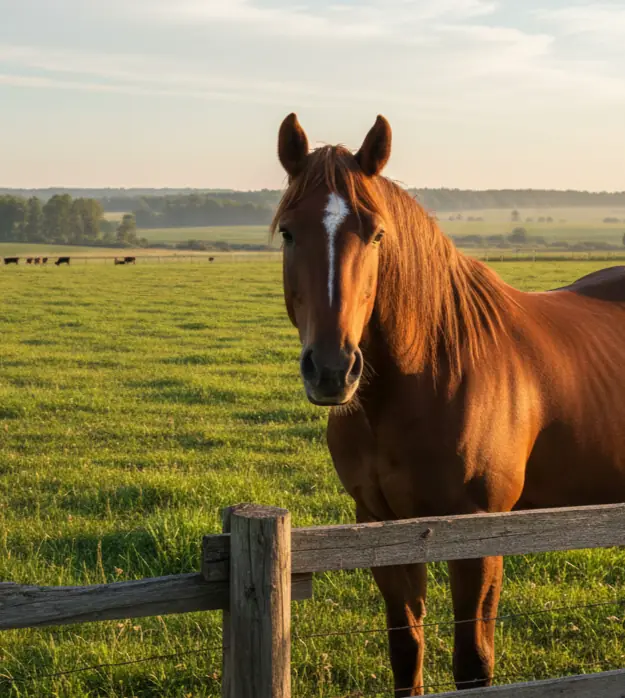
A soaked, pillowy mash for the old-timer whose teeth have retired even if the rest of them hasn't.
Put the beet pulp, chopped timothy hay, and oats all into one large bucket together. Pour in about 4 liters of warm water — again, "comfortable bath" temperature, not boiling. Stir it once, then walk away and let it soak for 15-20 minutes. Go brush your horse, pick hooves, contemplate the passage of time.
Come back and check the consistency. Everything should be soft and swollen. Squeeze a beet pulp chunk — if it's still hard in the center, give it another five minutes and a splash more water. Squeeze an oat — it should mush between your fingers. The hay should be floppy and soft, not stiff.
Grate the carrots directly into the bucket and stir everything together into one uniform porridge. Add more warm water if needed — you want it scoopable but not soupy. Think "thick oatmeal," not "soup" and not "concrete."
Serve at stall level in a wide, stable bucket or ground-level tub. Seniors often eat better with their heads low. Stay nearby for the first few minutes to make sure they're eating smoothly with no coughing or quidding.
Every meal, twice daily
When your horse hits their twenties and their teeth start looking like ancient ruins, they can't grind hay or hard feed anymore — but they still need every calorie and every nutrient. This mash turns tough-to-chew ingredients into a soft, warm slurry that an old horse can gum their way through without pain, frustration, or losing half their dinner on the floor. It's a complete meal replacement that respects the fact that your horse earned every grey hair.
For senior horses (typically 20+) with significant dental wear, missing teeth, wave mouth, or any condition that makes chewing long-stem hay painful or impossible. Also excellent for horses recovering from dental surgery or those with chronic quidding (dropping half-chewed wads of hay).
A thick, oatmeal-textured mash the color of golden porridge, with visible flecks of dark beet pulp throughout. It smells like a warm feed room — sweet, grainy, and comforting. Your old horse will drop their head into the bucket with the slow, contented determination of someone who knows exactly what's coming. They'll eat without lifting their head for ten straight minutes, and the slurping sounds will be audible from the barn aisle.
Can't reverse dental deterioration or replace veterinary dental care. If your horse is losing weight despite eating this, the issue may be deeper than teeth — get a vet exam.
Weight stabilization within 2-3 weeks of consistent twice-daily feeding. Improved coat condition within a month.
Never leave soaked feed sitting for hours — it ferments rapidly, especially in warm weather, and fermented feed can cause severe colic in seniors whose guts are already more fragile.
All ingredients MUST be fully soaked and soft. Any hard piece — a dry hay cube corner, an unsoaked oat, a carrot chunk — is a choke risk for a horse that can't chew properly.
If your senior horse coughs, drools excessively, or extends their neck while eating, stop feeding immediately and check for choke. Senior horses choke more easily and it's always an emergency.
Easy: Serve in a wide, shallow rubber tub on the ground so your horse can eat at the natural head-down position that helps their esophagus work properly.
Medium: Split the meal into two smaller buckets spaced a few meters apart in the paddock — gentle walking between feeds keeps old joints from stiffening up.
Hard: For seniors who still have some spark, scatter a few soaked hay cubes across a clean stall mat around the main bucket — a very gentle foraging challenge that keeps their brain engaged without frustrating toothless mouths.
Weigh your senior every two weeks with a weight tape. If they're losing weight on this recipe, increase the beet pulp and oats by 20% before panicking — most seniors just need more calories than you'd think.
In winter, make this with extra-warm water so the mash is steaming when it hits the bucket. Warm mash encourages seniors to eat and drink more, which prevents impaction colic.
Get your senior's teeth checked by an equine dentist at least once a year — even if they can't fix much anymore, they can smooth sharp edges that cause mouth ulcers.
If your horse starts leaving food in the bucket or eating dramatically slower, that's a dental change happening in real time. Time for a vet visit.
This mash works for every meal, every day, for the rest of your horse's life. It's not a treat or a supplement — it's the whole meal. Adjust quantities up or down based on body condition, not based on what the bag says.