Preparation
Wash thoroughly, remove any wilted or slimy outer leaves, and tear into manageable pieces — no need to chop finely, your bun loves a good wrestle with a big leaf.
Quantity
Aim for about 1 packed cup of leafy greens per 2 lbs of body weight daily. Romaine can make up a good chunk of that, but mix it with other greens rather than feeding romaine alone every day.
Notes
Romaine is one of the safest lettuces for rabbits — it has real nutritional value and a reasonable water content. Contrast that with iceberg lettuce, which is basically crunchy water with a lettuce costume on. Avoid iceberg entirely. Romaine all the way.
Nutritional Benefits
- Vitamin A powerhouse — great for your rabbit's eyesight, immune system, and keeping that coat glossy and soft
- Good source of Vitamin K, which supports healthy bone density and proper blood clotting
- Provides a gentle hydration boost thanks to its moderate water content (helpful for buns who don't drink enough)
- Contains folate and small amounts of calcium and phosphorus to support everyday cellular health
- Low in oxalates compared to spinach, so it won't interfere with calcium absorption the way some greens can
Safe Varieties
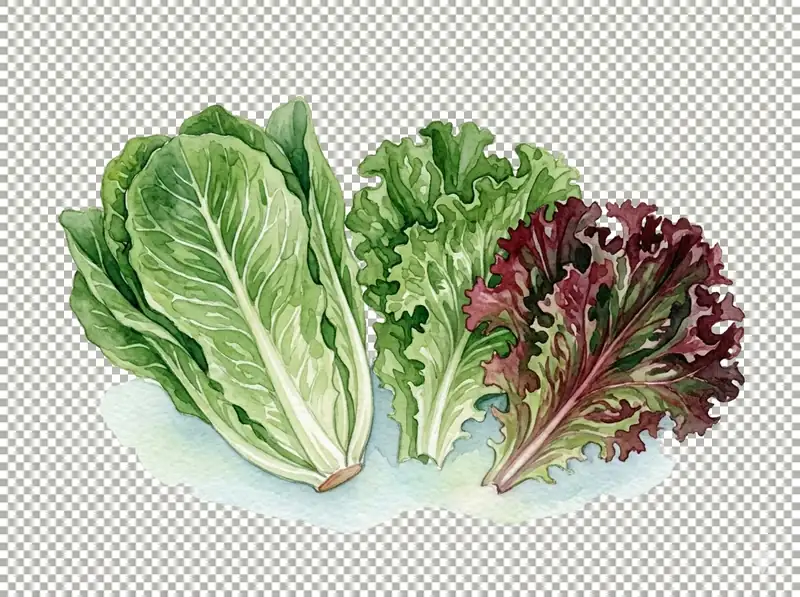
1. Romaine (cos) lettuce — the gold standard, dark green outer leaves have the most nutrients
2. Green leaf lettuce — another solid choice, mild and nutritious
3. Red leaf lettuce — great colour, slightly different nutrient profile, still rabbit-approved
4. Butter lettuce — softer texture, fine in moderation
5. Little gem lettuce — a compact romaine variety, just as good
Feeding Guide
Start with a few romaine leaves (2–3 large outer leaves) for an average-sized adult rabbit (about 4–6 lbs).
You can offer it daily as part of a mixed leafy green rotation — just don't make it the only green on the menu.
Baby rabbits under 12 weeks should stick to hay only; introduce greens slowly from around 12 weeks, romaine included.
Always introduce any new green gradually over 5–7 days and watch for soft cecotropes or loose droppings.
Positive Signs
- Enthusiastic lunging at the leaf the moment it appears (classic bun approval)
- Normal firm round droppings after eating
- Continued interest in hay (greens should never replace it)
- Bright eyes, active grooming, and general binkying energy
Negative Signs
- Soft, mushy, or unusually large cecotropes stuck to fur (too many greens too fast)
- Loose or watery droppings — back off greens and increase hay immediately
- Bloated or gurgly tummy — stop greens entirely and consult a vet if it persists
- Refusing hay after getting greens (time to rebalance the ratio — hay is always the main event)
Preparation Science
Romaine should always be washed under cold running water to remove pesticide residue and surface bacteria, even if it's labelled pre-washed. Room temperature leaves are slightly more aromatic than fridge-cold ones, which can make them more appealing to pickier bunnies — let the leaves sit out for 10 minutes before serving if your bun turns their nose up at cold greens.
Enrichment Science
Rabbits are natural foragers who thrive when they have to work a little for their food — it keeps their minds sharp and reduces boredom-related behaviours like excessive thumping or chewing furniture. Turning romaine time into a foraging activity taps into those deep-rooted instincts and makes mealtime genuinely fun.
Play Ideas
Easy: Tuck romaine leaves between the bars of the enclosure or hang them at nose height so your bun has to reach and pull — instant foraging fun.
Medium: Loosely roll a romaine leaf around a small piece of rabbit-safe herb (like a sprig of fresh parsley) and let your bun unroll and discover the hidden treat inside.
Hard: Hide torn romaine pieces inside a cardboard toilet roll tube stuffed with hay — your bun has to dig, chew, and investigate to get to the good stuff.
FAQ
Q: Can rabbits eat iceberg lettuce?
A: Hard no. Iceberg lettuce is basically 96% water with almost zero nutritional value — and worse, it contains lactucarium in higher concentrations than romaine, which can cause diarrhea and GI upset in rabbits. It's not worth the risk when there are so many genuinely good lettuces available. Stick to romaine, leaf lettuces, and other dark leafy greens.
Q: How much romaine is too much?
A: If your rabbit is getting more greens than hay, that's too much. Hay should make up 80–90% of the diet — greens are a supplement, not the main course. Overloading on any leafy green, even safe ones like romaine, can upset the delicate gut balance rabbits depend on. Think of romaine as a daily side dish, not the entree.
Alternatives
- Kale — more nutrient-dense than romaine but higher in oxalates and calcium; best used in small amounts as a supplement rather than a daily staple
- Spinach — packed with vitamins but very high in oxalates, so limit to once or twice a week; romaine is a better everyday choice
- Bok choy — great alternative with a satisfying crunch, lower calcium than kale, good for rotation
- Fresh herbs (parsley, cilantro, dill) — more aromatic and exciting than romaine, but richer, so use as flavour boosters rather than bulk greens
Risks & Disclaimer
Romaine is one of the safest greens you can offer your rabbit, but no single food should dominate the diet — variety is what keeps gut flora healthy and prevents nutritional imbalances. If your bun shows any signs of GI distress after introducing romaine, remove it, return to hay-only for 24 hours, and reintroduce slowly.