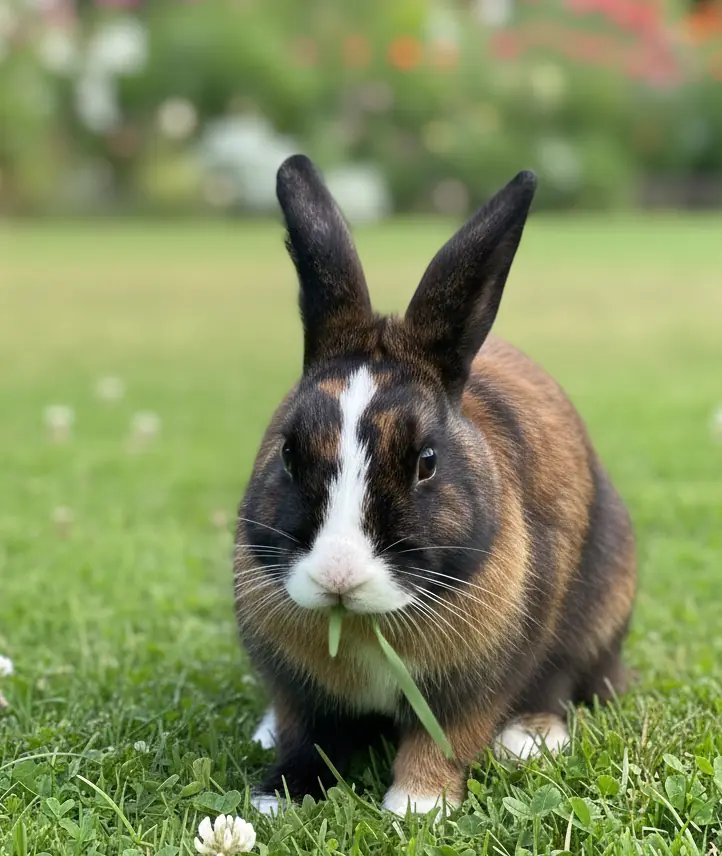
Preparation
1Wash all your greens thoroughly under cold running water — pesticide residue is no joke, and your rabbit's gut is more sensitive than yours. Shake off the excess water but don't dry them completely. You want that moisture clinging to the leaves — that's free hydration.
2Chop the romaine into thin ribbons, dice the cucumber (skin on), and roughly chop the cilantro. Toss everything together in a shallow bowl. The goal is a mixed salad, not neat little piles — you want your rabbit eating a bit of everything in each mouthful.
3Pull the timothy hay into short pieces and fold them through the wet greens so they stick to the chopped vegetables. Top with the watercress sprig, give it one final toss, and serve immediately while everything is crisp and glistening.
Best Time to Serve
Morning feed during spring and fall shedding seasons
Purpose
When rabbits molt, they swallow fur. A lot of fur. Unlike cats, rabbits can't vomit, so all that hair has to keep moving forward through the gut — and if it slows down, you're looking at GI stasis territory, which is as scary as it sounds. This smoothie is a hydration-and-fiber missile designed to keep everything sliding through smoothly. Wet greens + high-fiber hay pieces + water-rich veggies = a digestive slip-and-slide that fur can't clog.
When to Use
Pull this out during the big spring coat blow, the fall transition shed, or any time you notice your rabbit grooming obsessively and leaving tufts of fur on everything they touch. Especially important for long-haired breeds (angoras, lionheads) who produce enough loose fiber to supply a small textile factory.
What to Expect
A glistening, emerald-green pile of finely chopped wet greens with a confetti of hay bits stirred through — it looks like a fancy deconstructed salad at a restaurant that charges too much. Slightly soupy at the bottom from all that lovely hydration. Your rabbit will get a wet chin and look at you like you've personally invented food for the first time.
Does Not Fix
Won't slow down the shedding itself — the fur is coming out whether you like it or not. This just makes sure it exits from the correct end.
Time to Effect
Keeps the gut moving within hours. Use daily during heavy shedding periods for consistent protection.
Safety Risks
Always wash greens thoroughly — pesticide residue can cause serious digestive upset in rabbits, whose gut bacteria are extraordinarily sensitive to chemical disruption.
Serve immediately and remove uneaten portions within 2-3 hours. Wilted, warm greens can harbor harmful bacteria and nobody wants a surprise vet visit.
If your rabbit has never had cucumber before, introduce it in tiny amounts first. New foods need a 24-hour gut-check period before becoming a regular player.
Enrichment Ideas
Easy: Serve the chopped mix on a flat plate so your rabbit can nose through it and pick their favorites first (spoiler: the cilantro vanishes instantly).
Medium: Spread the mixture across a clean towel or hay mat so your rabbit has to forage across a larger area instead of eating from a single pile.
Hard: Freeze tiny portions of the wet mixture into an ice cube tray for summer — your rabbit gets a cold foraging puzzle that slowly reveals greens as it melts.
Owner Tips
During heavy shedding, groom your rabbit daily with a slicker brush BEFORE serving this. The less loose fur they swallow during grooming, the less work their gut has to do.
If your rabbit is a reluctant water drinker, this recipe is worth its weight in gold. Some rabbits get 80% of their hydration from fresh greens, not from a water bottle.
Watch the poops. Healthy cecotropes and round, uniform droppings mean the gut is moving well. Smaller, misshapen, or strung-together "pearl necklace" poops mean you need more hay, more water, or a vet chat.
Long-haired breeds (lionheads, angoras, jersey woolies) should get this daily during molts, not just occasionally. Their fur volume is genuinely dangerous if the gut slows down.
This is also a great recipe for post-bonding stress periods, when rabbits tend to over-groom themselves or their partners.
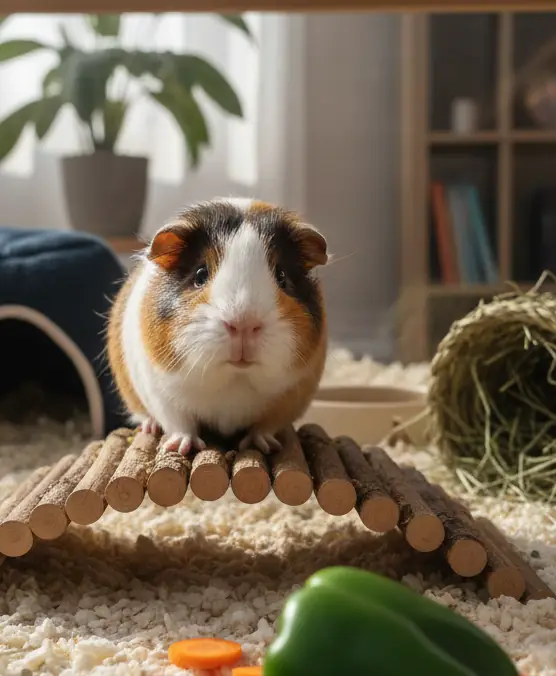 Guinea Pig
Directly Compatible
Guinea Pig
Directly Compatible
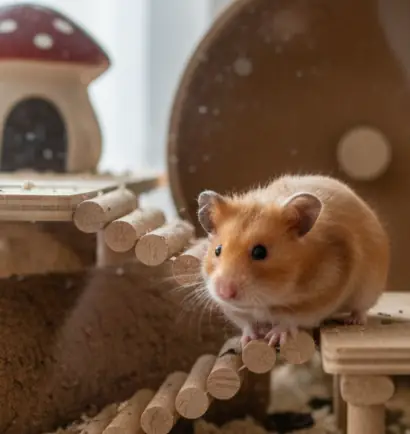 Hamster
Use with Caution
Hamster
Use with Caution