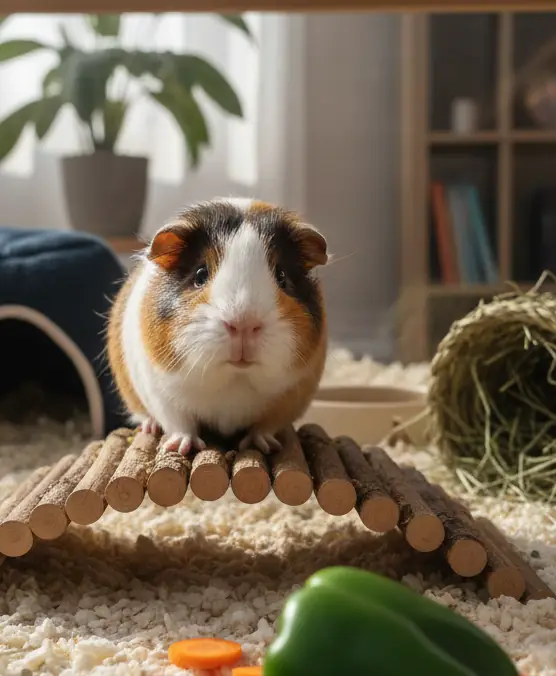
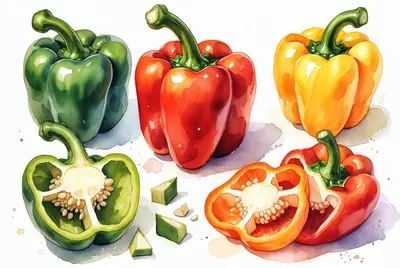
Preparation
Wash thoroughly, remove all seeds and the white pith inside, slice into strips or chunks small enough for easy handling
Quantity
One to two tablespoons of chopped pepper daily, or about a quarter of a medium pepper — this is a staple veggie, not a rare treat
Notes
The perfect daily vegetable. All colors are safe, but red and yellow are sweetest. Green has less sugar if your piggy is watching their waistline. Seeds can be choking hazards, so definitely scoop them out.
Nutritional Benefits
Vitamin C superstar — Guinea pigs can't make their own, and bell peppers are loaded with it
Crunchy texture keeps teeth in check without the sugar bomb of carrots
Hydration boost from high water content, great for preventing urinary issues
Low calorie means you can be generous without guilt
Antioxidants in colorful varieties support overall immune health
Safe Varieties
Red bell peppers — sweetest, highest vitamin C, your piggy's likely favorite
Yellow bell peppers — nearly as sweet as red, packed with nutrients
Orange bell peppers — mild sweetness, beautiful color variety
Green bell peppers — less sweet, lower calories, good for daily staples
Avoid: Hot peppers or any spicy varieties, pickled peppers (too much salt), peppers with moldy spots or soft patches
Feeding Guide
Baby Guinea pigs 2-4 months: Start with a tablespoon of green pepper, less sweet is easier on developing tummies
Adult pigs 1-2 pounds: Quarter to half a medium pepper daily, mix colors for variety
Senior pigs: Same as adults but watch for dental issues — if they struggle with crunch, chop finer
Pregnant or nursing sows: Up to half a pepper daily, the vitamin C is crucial for healthy babies
Positive Signs
Eager munching and bright eyes during veggie time
Healthy, firm poops — peppers digest easily for most piggies
Clear, bright eyes and active behavior
Good appetite for hay alongside the peppers — they're not filling up on veggies alone
Negative Signs
Diarrhea or very soft stools — cut back and offer more hay, could be too much water content
Refusing to eat peppers they previously loved — check for freshness or dental pain
Gassiness or bloating — some piggies are sensitive to peppers, try smaller amounts
Reddish urine after eating red peppers — totally normal pigment, but call vet if it persists beyond 24 hours
Preparation Science
Removing seeds isn't just about choking — pepper seeds contain trace compounds that can irritate sensitive digestive systems. The flesh is where the good stuff lives anyway.
Enrichment Science
The bright colors trigger visual curiosity, and the crisp texture provides auditory satisfaction — that crunch tells their brain they've found something worth eating.
Play Ideas
Easy: Hold a pepper strip and let them nibble from your hand during TV time
Medium: Stuff a small pepper half with hay for a edible bowl challenge
Hard: Create a "pepper ring toss" by hanging pepper slices on a safe rod for them to pull off
FAQ
Q: Can I feed my Guinea pepper seeds if they're small?
A: Skip the seeds entirely — they're a choking risk and offer zero nutrition. Your piggy won't miss them.
Q: My Guinea pig only likes red peppers and ignores green — is that bad?
A: Red peppers are the candy of the pepper world, so of course they have preferences! It's fine to favor red, just rotate in other colors occasionally for nutritional variety. Think of it like getting a kid to eat different colored vegetables.
ALTERNATIVES_COMPARITIES:
Cucumber has more water but way less vitamin C — peppers win for nutrition, cucumber wins for hydration
Zucchini is softer and less crunchy — good for older pigs with dental issues but lacks the vitamin C punch
Celery is crunchier but stringy and lower in nutrients — peppers are the safer daily choice
Carrots are sweeter but way higher sugar — peppers give you that daily vegetable slot without the sugar worry
Risks & Disclaimer
Bell peppers are one of the safest daily vegetables for Guinea pigs. The main risk is overfeeding leading to picky eating — if your piggy holds out for peppers and ignores hay, cut back. Hay should always be 80% of their diet, no matter how much they wheek for peppers.