Preparation
Serve dry and loose, or as intact spray millet; no cooking needed. Avoid flavored, salted, or seasoned varieties.
Quantity
Excellent as a primary feeder staple — millet can make up a significant portion of a mixed seed blend without issue. For spray millet, one small spray per feeder per day is plenty.
Notes
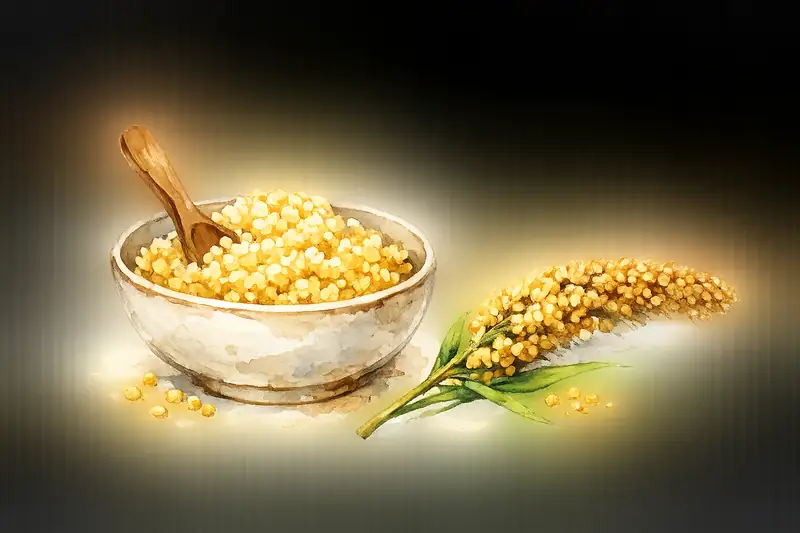
White proso millet is the gold standard for attracting ground-feeding songbirds. Spray millet (still on the stem) provides extra foraging stimulation and is especially loved by finches and buntings.
Nutritional Benefits
- Good source of carbohydrates for sustained energy during foraging and flight
- Contains moderate protein (around 11%) to support feather growth and muscle maintenance
- Provides B vitamins including niacin and thiamine, important for nervous system health
- Naturally low in fat, making it an appropriate everyday food rather than just an occasional treat
- Gentle on the digestive system — smaller birds handle millet easily compared to larger, harder seeds
Safe Varieties
1. White proso millet — the universal favourite; attracts the widest range of species
2. Spray/foxtail millet — still on the stem; doubles as enrichment and food
3. Red millet — similar nutritional profile; slightly less popular with some species but still widely eaten
4. Golden millet — less common but accepted; often included in quality wild bird mixes
Feeding Guide
For a platform or ground feeder, a good handful (roughly 1/4 cup) scattered per day per feeding station is a solid starting point.
Spray millet: hang one spray or lay it flat on a platform feeder — birds will strip it over 1–2 days.
Scale up or down based on how many visitors you're getting; fresh daily is better than a large stale pile.
Avoid letting loose millet sit in wet conditions for more than a day — soggy millet goes mouldy fast.
Positive Signs
- Ground-feeders clustering happily beneath or around the feeder
- Birds picking millet preferentially from a mixed seed blend
- Finches, sparrows, and doves visiting regularly and staying to eat (not just grab and go)
- Feathers looking glossy and full — a sign of a well-rounded diet that millet supports nicely
Negative Signs
- Millet sitting untouched and going mouldy (usually means wrong species mix visiting, or it got wet)
- Unusual lethargy in birds — though rare with millet, any stale or mouldy seed can cause gut upset
- Millet germinating under feeders into weedy patches (a mess nuisance, not a safety issue)
- Pests like mice or rats being attracted to spilled millet on the ground — keep feeding areas tidy
Preparation Science
Millet requires no preparation beyond ensuring it's dry and clean. The thin seed coat means it's immediately accessible to small-beaked birds without any cracking or soaking. Storing millet in a cool, dry container preserves nutritional quality for months; moisture is the enemy — wet millet spoils within hours in warm weather.
Enrichment Science
Ground-feeding birds like sparrows, juncos, and doves exhibit natural scratching and pecking behaviours when foraging for small seeds like millet — scattering it loosely on the ground or a platform feeder engages these instincts far better than a tube feeder. Spray millet adds tactile complexity, letting birds grip and strip seeds off the stem, which mirrors foraging behaviour they'd use on wild grass heads.
Play Ideas
Easy: Scatter a handful of white millet directly on a flat platform feeder or on the ground beneath your main feeder to attract ground-feeders like juncos and sparrows.
Medium: Hang a spray of foxtail millet from a branch or hook near eye level — watch finches and buntings cling and strip seeds while other birds try to muscle in.
Hard: Thread several spray millet stems together or weave them into a homemade "seed wreath" with other dried grasses and seeds for a foraging centrepiece that keeps birds busy for days.
FAQ
Q: What birds does millet attract that other seeds don't?
A: Millet is the top choice for ground-feeding songbirds — sparrows (house, song, white-throated, white-crowned), dark-eyed juncos, doves (mourning, Eurasian collared), and towhees all prioritise millet. Painted and indigo buntings go absolutely wild for it too. If you want more diversity beyond the typical chickadee-and-finch crowd, millet is your ticket.
Q: Is millet the same as the millet in my birdseed mix?
A: Almost certainly yes — white proso millet is a standard ingredient in most commercial wild bird mixes. The difference is quality and proportion; cheap mixes sometimes use millet as cheap filler mixed with oats and filler seeds that most birds ignore. Buying straight millet or a quality finch/songbird blend lets you control what you're offering and skip the rejected debris.
Q: Can I grow my own millet for the birds?
A: Absolutely — proso millet and foxtail millet are easy annual grasses that thrive in most temperate gardens. Let the seed heads form and dry on the plant, then either cut the stalks for spray millet or let birds harvest directly from the plant. It's genuinely one of the most satisfying wildlife-garden projects you can do with minimal effort.
Alternatives
- Sunflower seeds (black oil): Higher fat and protein than millet, excellent for clinging birds like finches and chickadees, but ground-feeders prefer millet; ideal to offer both
- Nyjer/thistle: Premium choice for goldfinches and siskins specifically, but a much narrower species appeal than millet; more expensive per pound
- Safflower seeds: Similar size to millet but harder shell; loved by cardinals and some sparrows, disliked by starlings and squirrels — a useful complement to millet rather than a replacement
- Cracked corn: Cheaper, attractive to many of the same ground-feeders, but higher in starch and lower in protein than millet; more likely to attract larger pest species
Risks & Disclaimer
Plain, unseasoned millet is one of the safest foods you can offer wild birds with virtually no toxicity concerns. The main risks are mould from wet or stale seed and attracting unwanted ground-level pests — both easily managed by offering small, fresh quantities and keeping the feeding area clean.