Preparation
1If you're planning ahead (and you should), air-dry the kale pieces and carrot cubes on a paper towel 2-3 hours before assembly. You want them leathery, not crunchy — they should bend without snapping.
2Combine the oats, whole pumpkin seeds, dried kale bits, and dried carrot cubes in a small bowl. Toss gently to mix.
3Here's where this recipe differs from everything else: do NOT put this in a dish. Bury individual pieces and small pinches throughout the cage bedding at various depths. Tuck a pumpkin seed under a hide. Push some oats an inch deep in a corner. Scatter kale bits near tunnels. You are building a treasure map.
4Walk away and let your hamster discover the network of stashes on their own schedule. Resist the urge to watch (but you'll watch, and it will be magnificent).
Best Time to Serve
During cage setup after a bedding change, or scattered while your hamster is sleeping
Purpose
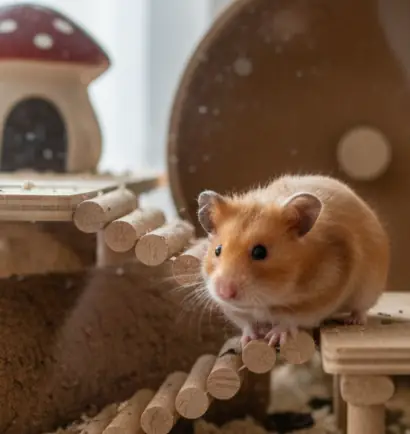
In the wild, golden hamsters maintain burrow systems up to 2 meters deep with separate chambers for sleeping, food storage, and bathroom business. Your hamster has the same instincts crammed into a cage, and this blend feeds directly into that burrowing-and-stashing drive. It's a mix of lightweight, non-perishable pieces designed to be buried in deep bedding and rediscovered over days — rewarding the digging instinct that's hardwired into every hamster's tiny brain.
When to Use
Best after a fresh bedding change when your hamster is itching to rearrange everything and establish new food stashes. Also excellent for hamsters who aren't burrowing much — sometimes they just need a reason to dig.
What to Expect
A dry, confetti-like scatter of pale oat flakes, dark pumpkin seed shards, emerald kale chips, and the occasional bright orange carrot bit. It disappears into bedding like buried treasure and reappears in tiny, curated hoards around the cage over the following days.
Does Not Fix
Won't stop your hamster from rearranging their entire cage at 3 AM with the volume and urgency of a construction crew on a deadline.
Time to Effect
Your hamster will start digging and stashing within minutes. The enrichment benefit continues for days as they rediscover buried pieces.
Safety Risks
The air-drying step is non-negotiable for the kale and carrot. Burying fresh, wet vegetables in warm bedding creates a mold incubator. Semi-dried pieces are safer for multi-day burial.
During weekly cage cleaning, check all hoard sites. Discard any green or veggie pieces that look slimy or smell off. Dry components (oats, seeds) can be left for your hamster to re-collect — removing ALL hoards at once is stressful for hamsters.
Ensure bedding depth is at least 6 inches for this recipe to work properly. Shallow bedding means surface scatter, not true burrowing — and the whole point is activating that deep-dig instinct.
Enrichment Ideas
Easy: Scatter pieces on the surface and just below the bedding top layer — entry-level treasure hunting for hamsters new to foraging enrichment.
Medium: Bury pieces at multiple depths (surface, 2 inches, 4 inches, bottom) so your hamster has to dig progressively deeper. Each depth level is a new "floor" of the treasure dungeon.
Hard: Create a "burrow maze" using connected cardboard tubes buried in bedding, with food pieces placed at junctions and dead ends. Your hamster has to navigate the underground network to collect everything. This is the hamster equivalent of an escape room.
Owner Tips
Deep bedding is not optional here. If your cage only has an inch or two of substrate, invest in more bedding before attempting this recipe. Paper-based bedding (like Kaytee Clean & Cozy) is ideal for burrowing.
After burying the blend, note roughly where you placed things. Over the next few days, watch how your hamster reorganizes everything into their own preferred stash locations — they'll consolidate, relocate, and curate their hoards with surprising intentionality.
This recipe is the best prescription for stress and cage aggression. A hamster with things to find, carry, and hide is a hamster too busy to chew bars or flip their water bottle for the tenth time.
Don't replace all hoards during cage cleaning. Leave at least one seed stash untouched — your hamster's sense of security is literally tied to knowing they have food saved. Wiping everything out is the hamster equivalent of emptying someone's savings account.
Pair this with a cage upgrade if possible. The more floor space and bedding depth your hamster has, the more elaborate their burrow systems become, and the more enrichment value this blend provides.
 Domestic Rabbit
Compatible with Adjustments
Domestic Rabbit
Compatible with Adjustments
 Guinea Pig
Use with Caution
Guinea Pig
Use with Caution