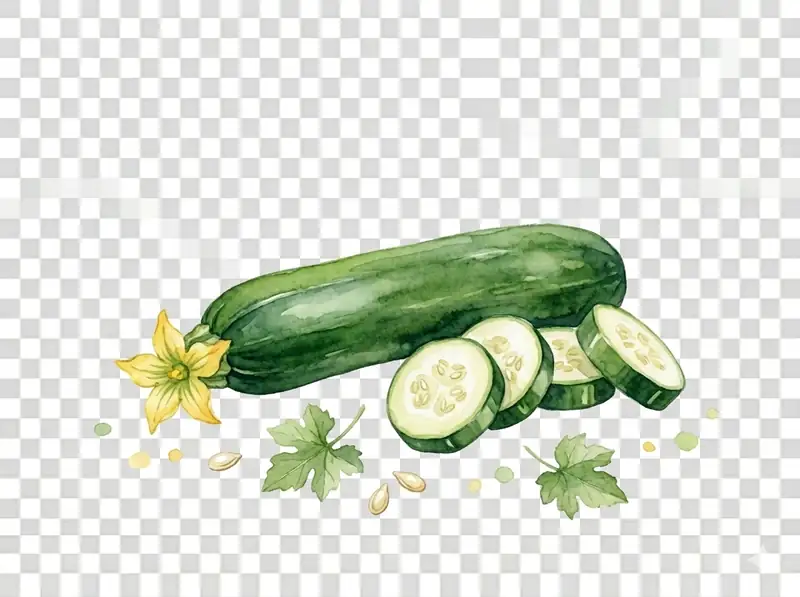
Preparation
Raw or cooked, both are perfectly safe. No seasoning, oil, butter, or sauces. Cut into bite-sized rounds or small chunks. The skin is safe and nutritious — no need to peel. Seeds are soft and harmless.
Quantity
A few slices for small dogs, half a small zucchini for medium dogs, and a generous portion for large dogs. It's so low in calories that portion control is mostly about avoiding digestive overload rather than calorie concerns.
Notes
Zucchini is one of the gentlest vegetables you can give a dog. It's so mild that it's an excellent first vegetable for dogs new to fresh food. The high water content (about 95%) also makes it a sneaky way to boost hydration in dogs who don't drink enough.
Nutritional Benefits
* Extremely low in calories — about 17 kcal per 100g, making it ideal for overweight dogs
* High water content (95%) — helps with hydration, especially in warm weather or for dogs who are light drinkers
* Good source of Vitamin A — supports skin, coat, and immune health
* Contains manganese — a trace mineral important for bone health and metabolism
* Provides potassium — supports heart function and muscle health
Safe Varieties
1. Raw zucchini slices — crunchy, hydrating, perfect for warm-weather treats; cut into appropriate sizes
2. Steamed zucchini — softer, easier to digest, good for senior dogs or those with dental issues
3. Lightly sautéed (no oil or seasoning) — brings out a slightly sweeter flavour some dogs prefer
4. Frozen zucchini slices — a cool, refreshing treat on hot days; most dogs enjoy the cold crunch
5. Avoid: fried zucchini, zucchini bread (sugar, flour, possibly xylitol), or any preparation with garlic, onion, or heavy seasoning
Feeding Guide
Small dogs (under 10kg): 2-3 thin slices or small chunks per serving.
Medium dogs (10-25kg): Half a small zucchini, sliced, is a generous and safe amount.
Large dogs (25kg+): A whole small zucchini sliced up won't cause any issues — it's mostly water.
Puppies: Start with a single small piece, steamed for easy digestion. It's so mild that most puppies take to it immediately.
Positive Signs
* Happily munches through zucchini slices with no digestive upset afterward
* Well-formed stools — zucchini's gentle fibre tends to support regularity
* Good hydration — especially noticeable if your dog normally doesn't drink much
* Accepts it readily in meals or as a standalone treat
Negative Signs
* Loose stools — uncommon but possible if too much is introduced too fast; the water content can loosen things up
* Complete disinterest — zucchini is bland, so some dogs simply aren't impressed; try lightly steaming it to bring out more flavour
* Vomiting — very rare with zucchini; if it happens, it's likely unrelated to the vegetable itself; monitor and consult your vet
Preparation Science
Zucchini's skin contains the highest concentration of antioxidants, including lutein and zeaxanthin, so leaving the skin on maximizes nutritional value. The flesh is easier to digest raw than most vegetables because it's already very soft and water-rich. Cooking reduces Vitamin C content but doesn't significantly affect the mineral profile.
Enrichment Science
The varied textures in zucchini — firmer skin on the outside, softer flesh inside, and the spongy seed core at the centre — give dogs three distinct chewing experiences in one vegetable. This textural complexity makes zucchini more engaging to eat than uniformly textured treats.
Play Ideas
Easy: Slice a zucchini into rounds and scatter them across the floor — a simple foraging activity with built-in hydration.
Medium: Cut a zucchini lengthwise and smear a thin layer of plain peanut butter (xylitol-free) in the seed channel — a natural lick-and-chew combo.
Hard: Freeze zucchini slices into layers of unsalted bone broth in a bowl — your dog licks and chews through each layer to reach the next.
FAQ
Q: Can dogs eat zucchini skin and seeds?
A: Yes to both. The skin is nutritious and most dogs eat it without issue. The seeds in zucchini are soft, small, and completely harmless — nothing like the hard seeds in pumpkins or melons.
Q: Is zucchini good for overweight dogs?
A: It's one of the best options available. At only 17 calories per 100g and 95% water, you can use zucchini to bulk up meals and replace higher-calorie treats without adding meaningful calories. Many vets recommend it as part of a weight management plan.
Alternatives
* Cucumber — even more water-dense and similarly low-calorie; less nutritious but even milder; great rotation partner
* Green beans — comparable calorie profile with more fibre and slightly more protein; equally safe for daily use
* Pumpkin — more calorie-dense and higher in beta-carotene; better for digestive support but not as suitable for weight management
* Carrot — higher in sugar and calories than zucchini but more popular with most dogs; zucchini is the better weight-loss choice
Risks & Disclaimer
Zucchini is one of the safest vegetables you can give a dog. Adverse reactions are extremely rare. The only real precaution is avoiding bitter-tasting zucchini — extreme bitterness (from cucurbitacins, found occasionally in homegrown squash) can indicate a toxic compound. If your zucchini tastes unusually bitter, don't feed it. Store-bought zucchini is virtually always fine.