Preparation
1Preheat your oven to 325°F and line a 9x9 baking pan with parchment paper. Separately, bake your saved eggshells at 250°F for 10 minutes, then crush them into a coarse grit.
2In a large bowl, combine the oats, sunflower seeds, minced kale, chopped parsley, and crushed eggshell grit. Toss everything together until the green bits are evenly distributed.
3Beat the three eggs in a separate bowl, then stir in the peanut butter until you have a thick, gloppy paste. Pour this wet mixture over the dry ingredients and stir aggressively until every oat is coated and the mixture is dense and sticky.
4Press the mixture firmly into the lined baking pan. Really press it — use the back of a spoon or your palms. You want this compressed tight so it holds together as blocks. Score the surface into 8-10 rectangles with a knife so they'll break apart easily after baking.
5Bake at 325°F for 40-45 minutes until the top is golden brown and firm to the touch. A toothpick should come out clean. Let it cool completely in the pan (at least 2 hours), then break along the score lines into individual blocks.
Best Time to Serve
Afternoon — after their morning lay, as a refuel
Purpose
During peak season, a high-producing hen is pushing out one egg roughly every 25 hours. That's the biological equivalent of running a marathon daily — she's burning through calcium, protein, fat, and trace minerals at a ferocious rate. These fuel blocks are designed to replenish exactly what the egg assembly line demands, in a format that's slow to eat (so they can't gorge), weather-resistant (so they work in any coop setup), and shelf-stable (so you can batch-prep for the whole season).
When to Use
Best used from early spring through late summer when daylight triggers peak laying. Also excellent for hens who are "laying themselves thin" — you know the type, the overachiever who hasn't missed a day in three months and is starting to look a bit haggard.
What to Expect
Dense, golden-brown bricks with visible flecks of seeds and green herbs throughout. They feel like a granola bar, smell like toasted oats and coconut, and have the structural integrity of a brick. Your hens will peck at them with focused, methodical determination — these aren't inhale-in-five-seconds treats, they're slow-release fuel stations.
Does Not Fix
Won't turn a low-producing breed into a high-producing one. A Silkie is never going to lay like a Leghorn, no matter how many fuel blocks she eats. Genetics set the ceiling; nutrition determines whether they reach it.
Time to Effect
3-5 days for consistent, daily laying without the occasional "skip day." Shell quality improves within a week.
Safety Risks
Ensure blocks are completely cooled before serving — the dense interior retains heat much longer than the surface.
Store in a dry location. If blocks develop any mold, discard the entire batch immediately — do not pick off the mold and serve the rest.
These supplement layer feed, not replace it. A hen eating only fuel blocks will have an unbalanced diet despite the blocks being nutritious.
Enrichment Ideas
Easy: Place a block on a flat rock in the yard so the flock can peck at it communally — it becomes a "gathering spot."
Medium: Thread a block onto a heavy string and hang it at beak-height from the coop ceiling so they have to peck upward — slows consumption and builds neck muscles.
Hard: Place blocks inside a wire suet cage designed for wild birds. The hens can see and smell the food but have to peck through the cage gaps to get tiny pieces — this can keep a flock occupied for an entire afternoon.
Owner Tips
Batch-bake a month's supply on a Sunday afternoon and freeze them in individual bags. Pull one out each morning and it'll be thawed by afternoon serving time.
If your blocks are crumbling, you didn't press hard enough or the egg ratio was off. Add one more beaten egg to the next batch as a binder boost.
These make excellent "bribes" for getting hens back into the coop before dark. Hold a block in your hand and walk toward the coop — they'll follow you like you're the Pied Piper.
Track your egg production before and after introducing these. Many keepers report their "skip days" (where a hen misses a day) drop noticeably within the first week.
The peanut butter smell means neighborhood dogs may also be interested. Serve these in a fenced area your dog can't access, unless you want a very confused dog trying to eat chicken food.
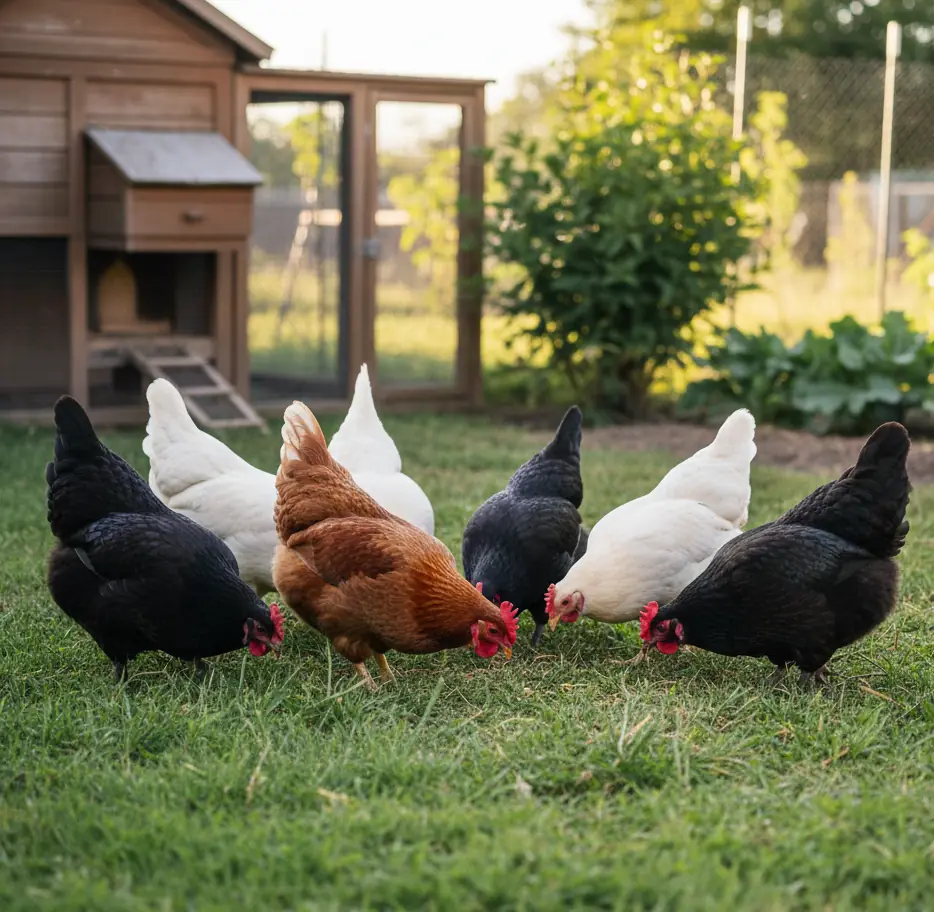
 Backyard Birds
Compatible with Adjustments
Backyard Birds
Compatible with Adjustments
 Domestic Rabbit
Use with Caution
Domestic Rabbit
Use with Caution