Preparation
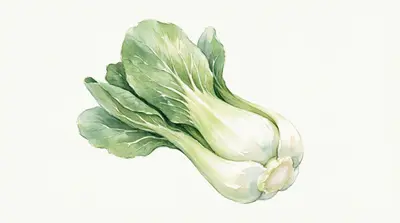
Wash thoroughly, tear into rabbit-sized pieces. Serve raw only — no cooking. Remove any yellowed, wilted, or slimy outer leaves.
Quantity
A leaf or two with stalk per rabbit, daily or several times a week. One of the safer rotation greens thanks to low oxalate content.
Notes
Bok choy is low in oxalates, which means the calcium it contains is actually absorbed instead of being blocked. This makes it a much better choice for regular feeding than high-oxalate greens like spinach. Rabbits with bladder sludge history can usually tolerate bok choy well — but check with your vet if they're calcium-sensitive.
Nutritional Benefits
* Highly bioavailable calcium — around 50% absorption, supporting strong bones and teeth
* Good source of vitamin A for healthy eyes, skin, and immune function
* Contains vitamin C, which rabbits produce themselves but can still benefit from in fresh form
* Provides vitamin K for blood clotting and bone metabolism
* Very low in oxalates — minerals get absorbed efficiently without bladder sludge risk
Safe Varieties
1. Regular bok choy — best all-around choice, great stalk-to-leaf ratio
2. Baby bok choy — more tender, perfect portion for a single rabbit
3. Shanghai bok choy — green stems, slightly milder, equally safe
4. Tatsoi — same family, spoon-shaped leaves, most rabbits enjoy it
Feeding Guide
Adult rabbit: 1-2 leaves with stalk per day, as part of a mixed greens serving.
Dwarf breeds: 1 small leaf per serving — adjust to body size.
Baby rabbits (under 12 weeks): No fresh greens at all — unlimited timothy hay only.
Juvenile rabbits (12 weeks-6 months): Introduce one small piece, wait 24 hours, watch for soft cecotropes before adding to rotation.
Positive Signs
* Enthusiastic crunching on the stalks — your bun is clearly enjoying the texture
* Clean plate — stalk and leaf both disappear with no waste
* Firm, well-formed cecotropes and regular droppings
* Active, playful behavior and bright eyes
Negative Signs
* Soft or mushy cecotropes — could be too much fresh food overall; reduce total greens portion
* Gas or bloating (hunched posture, reluctance to move) — mild brassica sensitivity; reduce frequency
* Ignoring it entirely — some buns need time with new textures; try just the leafy part first
* Loss of interest in hay — always a red flag regardless of which veggie triggered it
Preparation Science
Bok choy's calcium bioavailability of around 50% makes it one of the most efficient calcium sources among vegetables. By comparison, spinach delivers only about 5% of its calcium due to oxalate binding. For rabbits, who need steady calcium for dental health, this difference matters.
Enrichment Science
The crunchy stalk gives rabbits a satisfying chewing workout that helps wear down continuously growing teeth — a genuine dental health benefit beyond just nutrition. The dual texture (stiff stalk + soft leaf) also provides sensory variety that keeps foraging interesting.
Play Ideas
Easy: Clip a bok choy leaf to the side of the enclosure with a veggie clip for stand-up nibbling.
Medium: Tuck bok choy stalks into a hay rack so your bun has to tug them free through the hay.
Hard: Stuff a cardboard tube with hay and bok choy pieces at the center — a dig-and-discover puzzle.
FAQ
Q: Is bok choy safe for rabbits with bladder sludge?
A: It's generally one of the better options since it's very low in oxalates. However, it does contain calcium, so if your rabbit is on a specifically low-calcium diet prescribed by a vet, check before adding it. For most healthy rabbits, bok choy's calcium is a feature, not a bug.
Q: Can I give bok choy every day?
A: Yes — it's mild and low-risk enough for daily rotation. Just make sure it's part of a varied salad (3-5 different greens per day is ideal) rather than the only thing on the plate. Variety keeps the gut microbiome happy.
Alternatives
* Romaine lettuce — equally safe daily, more hydrating but less nutritious; great rotation partner
* Kale — more nutrient-dense but higher in oxalates and goitrogens; better as a 2-3x weekly green
* Cilantro — aromatic, calcium-friendly, zero oxalate concern; most buns love it alongside bok choy
* Spinach — similar vitamins but high oxalates block calcium; bok choy wins for regular feeding
Risks & Disclaimer
Bok choy is one of the safest leafy greens for rabbits, with excellent calcium bioavailability and very low oxalate content. The only real concern is introducing too much fresh food at once to a rabbit unused to greens. Start slow and your bun will thrive.