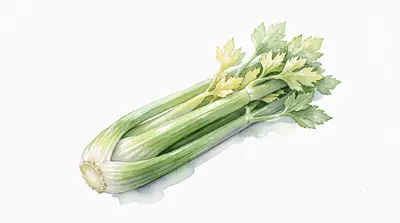
Preparation
Wash well. You MUST chop it into bite-sized pieces (1-2 inches) to break up the tough strings.
Quantity
Two or three chopped stalks per day.
Notes
An incredibly healthy, zero-sugar crunch for horses that need to lose weight.
Nutritional Benefits
* Stimulates saliva production, which helps buffer stomach acid and prevent ulcers.
* High in water and fiber, aiding in smooth digestion.
* Very low in calories, making it a guilt-free treat.
Safe Varieties
1. Fresh, crisp celery stalks - Chopped well, these are a great snack.
2. Celery leaves - Perfectly safe and highly aromatic; horses love the smell.
3. Slightly limp celery - Still safe, but harder to chop and less satisfying to eat.
4. Celery root (celeriac) - Safe, but must be peeled and chopped very small.
5. Unchopped, whole long stalks - Avoid feeding whole, the long strings can cause choke.
Feeding Guide
Average adult horse: 2 to 3 chopped stalks.
Overweight/IR horses: A perfect, safe daily treat.
Seniors with bad teeth: Skip it, it is too fibrous and stringy for them to grind up.
Positive Signs
* Vigorous, loud chewing.
* A healthy amount of drool (good for the stomach!).
* Eagerness to eat a healthy, low-sugar snack.
Negative Signs
* Gagging or coughing. This happens if you didn't chop it and a string got caught.
* Dropping it on the ground and walking away. It's a polarizing flavor!
Preparation Science
Celery contains long, indigestible cellulose strands running lengthwise. Chopping it horizontally severs these strands, eliminating the risk of them tangling in the throat or gut.
Enrichment Science
The intense chewing required to break down celery's fibrous structure increases saliva flow and extends foraging time, which reduces stall boredom.
Play Ideas
Easy: Mix chopped celery and leaves into their grain.
Medium: Fill a treat ball with celery chunks so they drop out as it rolls.
Hard: Push celery sticks into a cored apple to make an edible puzzle toy.
FAQ
Q: Why do I have to cut it up?
A: The long strings can literally wrap around food wads in their throat, causing a serious choking hazard.
Q: Is it okay if my horse eats the leafy tops?
A: Yes, the leaves are actually the most nutritious part!
Alternatives
* Carrots are sweeter and less stringy, but higher in sugar.
* Zucchini is softer and easier for older horses to chew.
* Romaine lettuce offers water and crunch without the dangerous strings.
Risks & Disclaimer
Celery is wonderfully healthy and safe for metabolic horses. The only danger is the strings, so always chop the stalks into short pieces before feeding!