Preparation
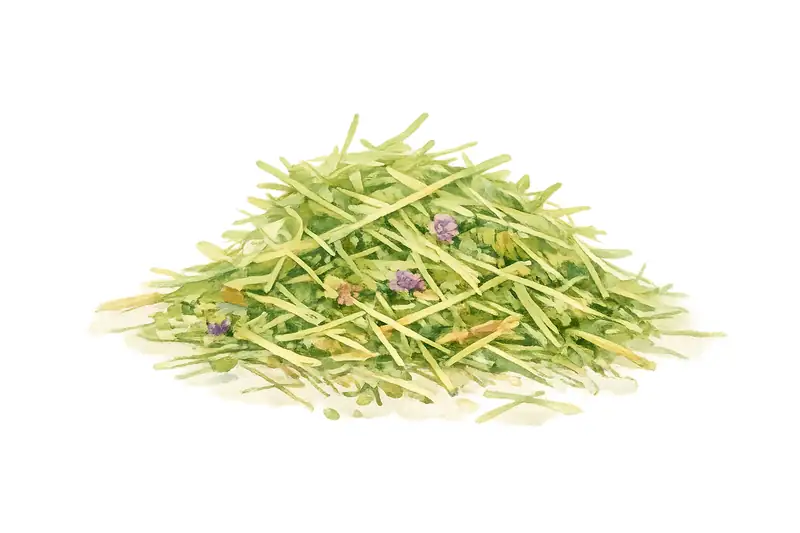
Feed only high-quality, mold-free, dust-free bales; never feed musty or heat-damaged hay
Quantity
Best as a supplement (10–20% of total hay ration) rather than a primary forage; suitable as a larger portion for pregnant mares, nursing mares, and growing youngstock
Notes
Too much alfalfa can contribute to weight gain, excess calcium, enteroliths (gut stones), and excitability in easy-keeping horses; grass hay should remain the forage foundation for most adult horses
Nutritional Benefits
- High crude protein (15–22%) supports muscle maintenance, tissue repair, and growth in young or working horses
- Rich in calcium, making it valuable for lactating mares and growing foals who have higher calcium demands
- Good source of digestible energy — useful for hard keepers, performance horses, or horses recovering from illness
- Contains beta-carotene (vitamin A precursor) and vitamin E, supporting immune function and eye health
- Higher calorie density than grass hays helps horses in heavy work maintain condition without piling on grain
Safe Varieties
1. First-cut alfalfa — coarser stems, more fiber, slightly lower protein; great for mature horses who don't need the full protein punch
2. Second-cut alfalfa — leafier, higher protein and calories; ideal for growing horses or lactating mares
3. Third-cut (and beyond) — very leafy, very rich; reserve for horses with the highest nutritional demands
4. Alfalfa/grass mix hay — blends alfalfa with timothy or orchardgrass, giving a middle-ground option well-suited to most adult horses
Feeding Guide
For a typical 500 kg adult horse at maintenance: limit alfalfa to 1–2 kg per day as part of a mixed hay ration.
For pregnant or nursing mares, growing foals, or horses in hard work: alfalfa can comprise up to 50% or more of total forage intake.
Easy keepers and metabolic horses (insulin resistance, laminitis history): keep alfalfa minimal or avoid entirely.
Always provide clean water freely — the extra protein in alfalfa increases the nitrogen load that kidneys must excrete.
Positive Signs
- Enthusiastic eating and clean, empty hay nets
- Healthy muscle tone and good body condition score (ideally 5–6 on a 9-point scale)
- Shiny coat and clear, bright eyes
- Normal, well-formed manure with no excess gas or loose stool
Negative Signs
- Weight gain or a cresty neck developing — signs the ration is too rich
- Increased excitability, spookiness, or restlessness after hay changes
- Frequent urination and very strong-smelling urine (excess protein being excreted)
- Loose manure or signs of digestive upset during the transition period
Preparation Science
Alfalfa's high soluble protein means it ferments faster than grass hays once cut, making bale quality critical. Sun-cured alfalfa retains more vitamins than barn-dried, but proper curing and storage (dry, ventilated, off the ground) is the real key to preventing mold and mycotoxin formation.
Enrichment Science
Horses are trickle feeders by nature — their digestive systems work best with near-constant access to forage rather than large infrequent meals. Alfalfa's palatability makes it a powerful tool for encouraging slow eaters or underweight horses to consume more forage overall.
Play Ideas
Easy: Stuff a small hay net with a mix of timothy and alfalfa — the richer smell of alfalfa draws your horse in and keeps the net interesting
Medium: Hide small amounts of alfalfa throughout a slow-feed hay rack filled mostly with grass hay, turning mealtime into a foraging puzzle
Hard: Create a hay trail across a paddock or pasture, placing small piles of mixed hay at intervals to encourage movement and natural grazing behavior
FAQ
Q: Can I feed alfalfa hay to my laminitic or metabolically sensitive horse?
A: It's best avoided for most metabolic horses. Alfalfa is higher in non-structural carbohydrates than some grass hays, and its calorie density can contribute to weight gain — a major laminitis trigger. Stick to low-NSC grass hays and consult your vet before adding alfalfa to a metabolic horse's ration.
Q: My horse seems hyper after I switched to more alfalfa — is that real?
A: It's a common observation, and there's some truth to it. The higher protein and energy density can fuel excitability in horses that don't have the work load to match. It's not a guaranteed effect, but if your horse is acting like they've had too many espressos, dialing back the alfalfa is a sensible first move.
Alternatives
- Timothy hay — lower protein, lower calcium, lower calories; the gold standard for adult horses at maintenance and the safest base forage for metabolic horses
- Orchardgrass hay — moderate protein, highly palatable, good energy; a great middle-ground alternative for horses who need a little more than timothy without the richness of alfalfa
- Beet pulp — comparable calories and digestibility; good for hard keepers as a non-grain energy source, but lacks the protein punch of alfalfa
- Oat hay — lower protein than alfalfa, moderate energy; easy to digest and often well-tolerated by horses with sensitive guts
Risks & Disclaimer
Alfalfa hay is safe and genuinely beneficial for horses with higher nutritional needs, but it can cause serious issues — including enterolithiasis (intestinal stones), obesity, and laminitis — when fed in excess to horses who don't need it. When in doubt, have your hay tested and work with an equine nutritionist to match your hay choice to your horse's actual workload and health status.