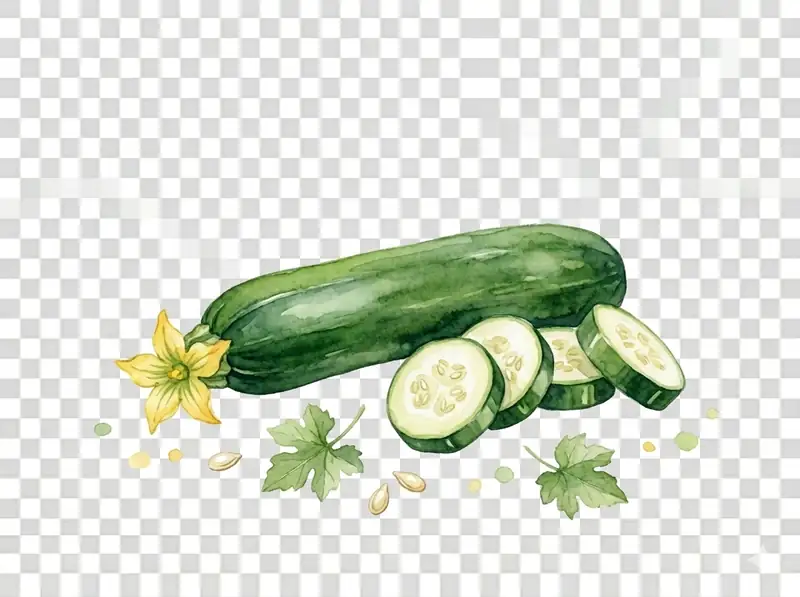
Preparation
Wash well, slice into thin rounds or small cubes (about 1 cm). Leave the skin on — it's safe and adds a little fiber. Raw is best; no cooking, seasoning, or oil needed.
Quantity
A 1 cm cube or thin slice 2-3 times per week. Zucchini is low in sugar and calories, making it one of the safer frequent-rotation veggies. Don't go overboard though — too much water content can cause soft stools.
Notes
One of the lowest-sugar vegetables you can offer a hamster, which makes it especially good for dwarf breeds prone to diabetes. It won't spike blood sugar the way carrots or fruit do.
Nutritional Benefits
* Very low in sugar — one of the safest veggies for diabetes-prone dwarf hamsters
* Contains vitamin C for immune support and wound healing
* Provides potassium, which helps with muscle function and hydration balance
* Good source of manganese for bone health and metabolism
* High water content supports hydration, especially for hamsters who drink sparingly
Safe Varieties
1. Green zucchini (standard) — the classic, widely available, hamster-tested and approved
2. Yellow zucchini (golden) — same nutritional profile, slightly sweeter taste, equally safe
3. Round zucchini (Eight Ball variety) — same species, fun shape, safe to serve
4. Frozen zucchini (thawed) — fine in a pinch, but loses some crunch; fresh is better
Feeding Guide
One small cube (about 1 cm) or a thin round slice per serving.
Offer 2-3 times per week as part of a varied veggie rotation.
Dwarf hamsters: stick to half a cube — their tiny systems handle less volume.
Remove any uneaten zucchini after a few hours to prevent it going mushy in the cage.
Positive Signs
* Your hamster grabs the piece and starts nibbling immediately — clear approval
* Pouching it for later — totally normal hamster behavior, means they like it enough to save
* Normal, firm droppings with no change in consistency
* Active and alert after eating — business as usual
Negative Signs
* Soft or watery droppings — the high water content might be too much; reduce portion size
* Ignoring it completely — some hamsters just prefer crunchier options; no harm done
* Mushy uneaten pieces left in the cage — remove promptly to avoid bacterial growth
* Diarrhea or wet tail symptoms — stop all fresh foods and see a vet immediately (unlikely from zucchini alone)
Preparation Science
Leaving the skin on provides a slightly tougher texture that encourages more chewing — good for dental health since hamster teeth grow continuously. The skin also contains most of the fiber, so peeling it removes the part that actually helps with digestion.
Enrichment Science
Hamsters are natural hoarders and foragers. A small piece of zucchini tucked into their bedding or hidden in a tunnel gives them something to discover, which activates the same search-and-store behavior they'd use in the wild. Low-effort enrichment with real payoff.
Play Ideas
Easy: Place a thin zucchini round on top of their food bowl — a simple "find the new thing" moment.
Medium: Tuck a small cube inside a cardboard toilet paper roll stuffed with hay — forage and dig to find it.
Hard: Scatter several tiny zucchini pieces throughout the cage bedding at different depths — a full-on treasure hunt.
FAQ
Q: Can my hamster eat zucchini every day?
A: It's safe enough, but variety is better. Rotating zucchini with other low-sugar veggies like cucumber, broccoli, and bell pepper keeps the diet balanced and keeps your hamster interested. Every other day or 2-3 times a week is ideal.
Q: Should I peel the zucchini first?
A: No need — the skin is safe and actually provides extra fiber and chewing texture. Just wash it well to remove any pesticide residue. If you buy organic, even less to worry about.
Alternatives
* Cucumber — very similar profile (low sugar, high water), slightly less nutritious; both are great rotation partners
* Broccoli — more nutrient-dense but can cause gas; zucchini is the gentler option for sensitive tummies
* Bell pepper — higher in vitamin C, slightly more sugar; a good complement rather than a replacement
* Cauliflower — another low-sugar brassica option, but more likely to cause gas than zucchini
Risks & Disclaimer
Zucchini is one of the safest vegetables for hamsters — low sugar, low risk, well-tolerated by both Syrian and dwarf breeds. The only watch-out is overfeeding watery foods in general, which can cause soft stools. Keep portions small and you're golden.