Preparation
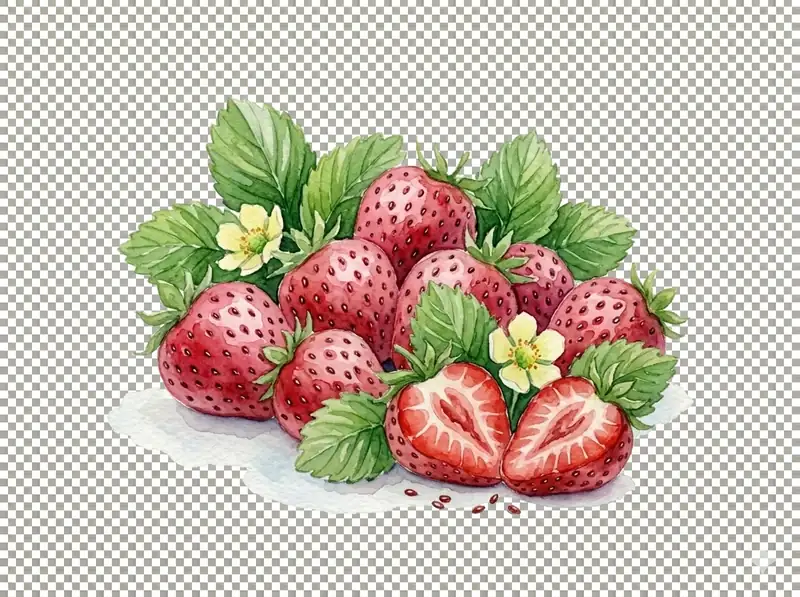
Wash well to remove dirt and pesticides. Remove the green top (the hull) and leaves. Cut a tiny piece—never the whole berry.
Quantity
A piece the size of a pea (for Syrians) or a small sunflower seed (for dwarfs), no more than once a week.
Notes
Strawberries are high in Vitamin C, which is great, but also high in sugar and acid. The tiny seeds on the outside are totally safe and actually add fiber! It's just the sheer amount of fruit that you need to watch.
Nutritional Benefits
* Packed with immune-boosting Vitamin C.
* High in manganese, which is good for bone health and metabolism.
* Full of antioxidants and polyphenols that protect their cells.
* The seeds provide a tiny bit of extra fiber.
Safe Varieties
1. Fresh, Ripe Strawberries: The best choice. Look for bright red berries—they're riper and sweeter.
2. Organic Strawberries: Strawberries are notorious for pesticide residue. If you can, organic is a much safer bet.
3. Homegrown Strawberries: Even better! You know exactly what's on them (or not on them).
4. Wild Strawberries (Alpine strawberries): Tiny and intensely flavored. One of these small berries might be the perfect portion for a dwarf hamster!
5. What to Avoid: Strawberry tops and leaves (not toxic but tough and may have residue). Also avoid dried strawberries, strawberry jam, yogurt-covered strawberries, or any processed strawberry products.
Feeding Guide
* Syrian Hamster: One pea-sized piece (about 1/4 of a small strawberry), once a week.
* Dwarf Hamster: A piece the size of a small sunflower seed, once every 10-14 days.
* The Acid Test: Because of the acidity, if your hamster has a sensitive tummy, you might want to skip strawberry and choose a sweeter, less acidic fruit like blueberry.
Positive Signs
* Excited nibbling and investigation of the bright red color and sweet smell.
* Holding the piece in their paws and munching away.
* Normal activity and digestion.
Negative Signs
* Diarrhea or loose stool.
* Mouth irritation or pawing at the mouth (rare, but possible from the acid). If you see this, rinse their mouth gently with water and don't offer strawberry again.
* Sticky fur or mess from the juice.
* The piece rots in their stash—always check for and remove uneaten fresh food.
Preparation Science
Cutting a strawberry releases its volatile aroma compounds, making it more enticing. Offering a tiny piece ensures the acidic juice doesn't irritate their skin or mouth and prevents messy hoarding.
Enrichment Science
The bright red color of a strawberry is highly visible to hamsters and signals a ripe, sugary food. The combination of a novel scent, color, and the tiny seeds on the outside provides a complex sensory experience.
Play Ideas
Easy: Place the tiny strawberry piece on a clean, dry leaf (like from a safe herb) for a natural presentation.
Medium: Freeze a tiny strawberry piece inside a small ice cube with a basil leaf.
Hard: Spear the strawberry piece on a thin, clean twig from a safe wood (like applewood) and wedge it between cage bars.
FAQ
Q: Can my hamster eat the strawberry seeds? They're on the outside.
A: Yes, absolutely! Those little seeds are totally safe and digestible. They add a tiny bit of fiber. No need to remove them.
Q: I dropped a whole strawberry in the cage by accident. What should I do?
A: Fish it out immediately! A whole strawberry is way too much sugar and acid, and it'll rot in no time. Replace it with a tiny, proper portion if you want them to still have a treat.
Alternatives
* vs. Blueberries: Blueberries are lower in sugar and less acidic, making them a safer all-around choice. Strawberry is a more "exciting," occasional swap.
* vs. Raspberries: Similar sugar and acid levels. Both are great to rotate.
* vs. Apple: Apple is less acidic and crunchier. If your hamster has a sensitive tummy, apple is the safer bet.
* vs. Melon: Melon is mostly water and much less acidic. A better choice for hydration without the acid.
Risks & Disclaimer
Strawberries are safe and healthy in theory, but their sugar and acid content means they sit firmly in the "occasional treat" category. For dwarf hamsters or those with sensitive stomachs, approach with extra caution. A tiny, pea-sized nibble once in a while is the way to enjoy this berry safely.