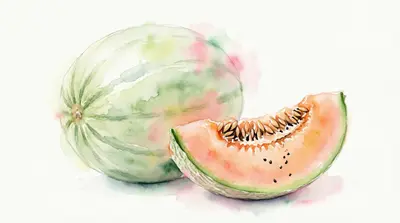
Preparation
Wash the rind well before cutting. Scoop out ALL the seeds—they can be a choking hazard. Cut the flesh into tiny, bite-sized cubes, leaving the rind behind.
Quantity
One small cube (about 1cm x 1cm), no more than once a week.
Notes
Melon is mostly water, which is great for hydration, but it's also surprisingly high in natural sugar. The different types (cantaloupe, honeydew, etc.) have slightly different nutrient profiles, but they're all safe and similar.
Nutritional Benefits
* Fantastic for hydration—it's over 90% water!
* Cantaloupe, in particular, is loaded with Vitamin A (beta-carotene) for great eye health.
* A good source of Vitamin C to support their immune system.
* Low in calories and fat, so it won't pack on the pounds if fed sparingly.
Safe Varieties
1. Cantaloupe: The orange-fleshed melon. Highest in Vitamin A. A wonderful, nutrient-rich choice.
2. Honeydew: Green-fleshed and very sweet. High in Vitamin C and potassium.
3. Galia Melon: Similar to cantaloupe, with greenish flesh. Perfectly safe and delicious.
4. Watermelon: Technically a different family, but treated the same way. It's even more hydrating! (See separate note on watermelon).
5. What to Avoid: The rind is too tough and fibrous for them to eat. The seeds must be completely removed as they are a serious choking hazard. Also, avoid any melon that's overripe, mushy, or fermented.
Feeding Guide
* Syrian Hamster: One small cube, about 1cm x 1cm, once a week.
* Dwarf Hamster: A piece half that size, once a week.
* The Water Rule: Because it's so watery, too much melon can very easily cause diarrhea. Stick to the tiny cube!
Positive Signs
* Your hamster will likely enjoy the juicy, sweet flavor.
* They seem refreshed and hydrated after eating it, especially in warm weather.
* Normal, healthy poops.
Negative Signs
* Wet, messy stool (diarrhea)—the most common sign of overdoing the melon.
* They make a sticky mess in their cage (melons are juicy!).
* They try to stash the piece and it goes bad quickly. Monitor and remove uneaten portions within a few hours.
* Choking or pouch issues if any seeds were missed (another reason to be thorough!).
Preparation Science
Cutting the melon into a small, firm cube (rather than a mushy chunk) makes it easy for them to hold and prevents it from disintegrating into a sticky puddle. Removing the rind prevents them from trying to gnaw on something too tough.
Enrichment Science
The soft, melt-in-your-mouth texture of melon is completely different from their hard pellets and seeds. This novel texture encourages exploratory eating and provides sensory enrichment.
Play Ideas
Easy: Place the small melon cube on a cool, flat rock in their cage.
Medium: Freeze a tiny melon cube and offer it on a hot day—it'll be a cool, hard treat that softens as they lick it.
Hard: Scoop a tiny melon ball (smaller than a pea) using a melon baller and roll it in a pinch of crushed, plain oats for a crunchy outside and juicy inside.
FAQ
Q: Can I give my hamster the melon rind to chew on?
A: It's not a good idea. The rind is very tough and often has dirt or pesticide residue on it. They could hurt their teeth trying to chew it or ingest something harmful. Stick to the flesh.
Q: Is cantaloupe better than honeydew for my hamster?
A: Not better, just different! Cantaloupe has more Vitamin A, while honeydew has more Vitamin C. Both are great. Rotating them would give your hamster a nice variety of nutrients.
Alternatives
* vs. Cucumber: Both are hydrating, but cucumber has virtually no sugar, making it a safer choice for more frequent hydration. Melon is the sweeter, "special occasion" version.
* vs. Apple: Both have sugar. Melon is more hydrating, while apple has more fiber and crunch.
* vs. Banana: Melon is much lighter, less starchy, and less sugary than banana, making it a better choice overall if you want a sweet treat.
* vs. Berries: Berries have more antioxidants and fiber. Melon is mostly water. Both are good for different reasons!
Risks & Disclaimer
Melon is a safe and healthy treat, but its high water and sugar content means it can easily cause diarrhea. The seeds are also a significant choking hazard. As long as you're meticulous about removing seeds and stick to the "tiny cube, once a week" rule, it's a perfectly lovely, refreshing snack.