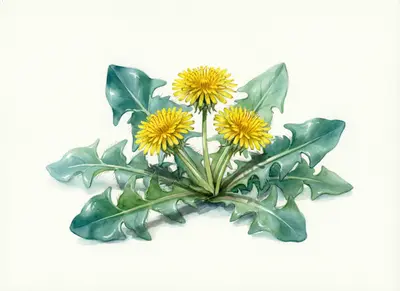
Preparation
Wash THOROUGHLY. If foraging, pick from areas guaranteed to be free of pesticides, herbicides, and dog pee. Offer raw, chopped into small pieces.
Quantity
One or two small leaves (or a teaspoon of chopped leaves), 2-3 times a week.
Notes
Dandelions aren't just safe—they're incredible for hamsters! They're a natural appetite stimulant and help with digestion. Just be 100% sure about where you're picking them from. No roadways, no dog parks, no chemically treated lawns.
Nutritional Benefits
* Jam-packed with vitamins A, C, and K for immunity, vision, and blood health.
* High in calcium and iron for strong bones and healthy blood.
* Acts as a natural, mild diuretic, which can help with mild bloating or water retention.
* Full of antioxidants and bitter compounds that stimulate digestion and liver function.
Safe Varieties
1. Home-Grown Dandelion Greens: The absolute best. You control the soil and know no chemicals were used.
2. Wild-Foraged (Safe Zone) Dandelion Greens: Only from your own yard if you don't use chemicals, or from a trusted, pristine wild area far from roads.
3. Store-Bought Dandelion Greens: Found in some supermarkets or farmers' markets. These are cultivated and guaranteed pesticide-free. A very safe and easy option!
4. Dried Dandelion Greens: Sometimes sold as a treat. These are safe but less exciting. Rehydrate them slightly before feeding.
5. What to Avoid: Any dandelions picked from roadsides, public parks, golf courses, or anywhere that might be sprayed. Also avoid wilted or yellowing leaves.
Feeding Guide
* Syrian Hamster: 1-2 small, fresh leaves or about 1-2 teaspoons of chopped leaves, 2-3 times a week.
* Dwarf Hamster: 1 small leaf or about half a teaspoon of chopped leaves, 2-3 times a week.
* The Forager's Rule: If introducing wild greens, start with a very small piece to make sure they tolerate it well.
Positive Signs
* Your hamster eagerly nibbles the slightly bitter greens.
* Healthy digestion and normal urination (the diuretic effect is mild).
* They enjoy the novel taste and texture.
Negative Signs
* Diarrhea if they eat too much at once.
* Signs of pesticide exposure (lethargy, drooling, tremors) if you picked from a bad spot—this is why source matters!
* They ignore them (the bitter taste isn't for every hamster).
Preparation Science
Chopping the greens releases their scent and makes them easier to eat. For wild-foraged greens, a soak in cool water with a tiny bit of vinegar can help remove any unseen residues before a final rinse.
Enrichment Science
The slightly bitter taste of dandelion greens is a novel flavor profile that stimulates the palate and encourages acceptance of diverse food types. Foraging for wild greens also connects them to their ancestral diet.
Play Ideas
Easy: Tuck a few small leaves under a rock or toy in their cage for them to discover.
Medium: Weave a dandelion leaf through the bars of their cage for a fun pulling challenge.
Hard: Create a "foraging patch" by placing a few leaves in a small box filled with chemical-free soil and hay, letting them dig and root around.
FAQ
Q: Are the yellow flowers safe too?
A: Yes! Dandelion flowers are also safe and edible. They're pretty and fun for them to nibble. Same rules apply—make sure they're from a clean source.
Q: Can dandelion greens help my hamster if they seem a little puffy or bloated?
A: They might! The natural diuretic properties can help flush out excess fluids. Offer a small leaf and see if it helps. If bloating persists, a vet visit is needed.
Alternatives
* vs. Kale: Both are nutrient powerhouses. Dandelion greens have the added benefit of being a natural diuretic and appetite stimulant.
* vs. Spinach: Dandelion greens are lower in oxalates than spinach, making them a safer choice for more frequent feeding.
* vs. Parsley: Another herb with diuretic properties. Both are great! Rotate them for variety.
* vs. Romaine Lettuce: No contest. Dandelion greens are far more nutrient-dense than watery romaine.
Risks & Disclaimer
The only real risk with dandelion greens is contamination from pesticides or pollutants. If you source them responsibly—from your own organic garden, a trusted store, or a pristine wild area—they are one of the healthiest, most natural treats you can offer. Happy foraging!