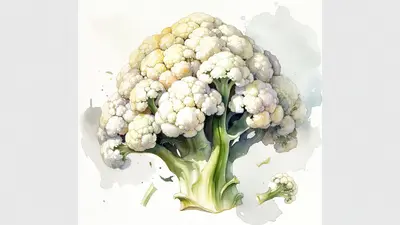
Preparation
Offer tiny, pea-sized florets with no stem — break them into the smallest pieces your hamster's little paws can handle. Remove any leaves (they can cause extra gas) and always serve raw, never cooked or seasoned.
Quantity
One pea-sized piece of floret, once or twice a week at most. Cauliflower is a brassica and can cause gas and bloating if overfed — and a gassy hamster is not a happy hamster.
Notes
Like all brassica vegetables (broccoli, cabbage, kale), cauliflower contains compounds that can cause intestinal gas if given too frequently or in large amounts. Rotate with other veggies rather than making it a daily staple. Introduce slowly to watch for digestive sensitivity.
Nutritional Benefits
* Rich in vitamin C, which supports immune health — especially important since hamsters cannot synthesize their own vitamin C
* Contains vitamin K, which plays a role in bone strength and blood clotting
* Provides folate (vitamin B9), supporting cell growth and repair
* Good source of fiber, which aids gut motility and helps keep your hamster's digestive system ticking along
* Very low in sugar and calories, making it a great guilt-free treat compared to fruit-based snacks
Safe Varieties
1. White cauliflower — the standard variety, widely available and perfectly safe
2. Orange cauliflower — slightly higher in beta-carotene, equally safe in tiny portions
3. Purple cauliflower — gets its color from anthocyanins (antioxidants), fine to offer
4. Romanesco — technically a cauliflower-broccoli hybrid; safe in the same small quantities
Feeding Guide
Offer one pea-sized piece of raw cauliflower floret per serving — that's roughly the size of your hamster's nose, which feels appropriately on-brand.
Limit to once or twice per week, alternating with other safe vegetables so your hamster gets variety without overdoing the brassicas.
Always introduce a new food over 1-2 days and watch for any signs of loose stools or bloating before making it a regular offering.
Remove any uneaten pieces from the cage within a few hours to prevent spoilage.
Positive Signs
* Eagerly approaching and nibbling the floret
* Stuffing a piece into their cheek pouches to save for later (the highest compliment)
* Normal, firm droppings in the hours following the snack
* Active, curious behavior after eating — no sluggishness or hunching
Negative Signs
* Loose or unusually wet droppings, which may indicate digestive upset
* Bloated or distended belly — a sign of gas buildup, pull back on cauliflower immediately
* Disinterest in the food and leaving it untouched (some hamsters just don't love it, and that's fine)
* Hunched posture, reluctance to move, or grinding teeth — signs of abdominal discomfort requiring a vet check
Preparation Science
Raw cauliflower retains far more vitamin C than cooked — heat degrades this water-soluble vitamin rapidly, so always offer it fresh and uncooked. A quick rinse under cool water removes surface residues and is all the prep your hamster's floret needs.
Enrichment Science
Hamsters in the wild forage constantly for food, so offering vegetables like cauliflower in foraging-style setups taps into that natural drive and provides genuine mental stimulation. The crunchy texture of raw cauliflower also supports natural gnawing behavior, helping to keep those ever-growing teeth worn down.
Play Ideas
Easy: Place a tiny cauliflower floret at the end of a short cardboard tube so your hamster has to investigate and reach in to retrieve it.
Medium: Bury a pea-sized piece of cauliflower under a shallow layer of bedding in one corner of the cage and let your hamster sniff it out.
Hard: Tuck a floret inside a small paper bag folded shut — your hamster will need to gnaw and push through the paper to claim the prize.
FAQ
Q: Can my hamster eat cauliflower leaves and stems too?
A: It's best to stick to the floret only. The leaves and thick stems contain higher concentrations of the gas-causing compounds found in brassicas, and the leaves can also be tougher to digest. The fluffy white floret is the safest and most enjoyable part for your hamster.
Q: My hamster stuffed the cauliflower in their cheek pouches — is that safe?
A: Totally normal hamster behavior! Cheek-packing is how hamsters transport food back to their "pantry." Just be aware that moist foods like cauliflower can get stuck or start to spoil in the pouches. Check that your hamster empties their pouches and eats or caches the food within a reasonable time, and remove any uneaten pieces from the cage promptly.
Alternatives
* Broccoli — also a brassica with similar gas risk, but slightly higher in vitamin C and protein; rotate rather than combine to keep gas risk low
* Cucumber — much lower in nutrients but very high in water content, making it a great hydrating treat; far less gas risk than cauliflower
* Bell pepper (red) — excellent source of vitamin C with no brassica gas risk, arguably a safer everyday option than cauliflower
* Zucchini — mild, low-sugar, very digestible; a gentler veggie option for hamsters with sensitive tummies
Risks & Disclaimer
Cauliflower is safe for hamsters in small, infrequent amounts but carries a real risk of gas and bloating if overfed — keep portions pea-sized and limit to once or twice a week. As with any new food, introduce it gradually and discontinue if you notice loose stools, a bloated belly, or signs of discomfort.