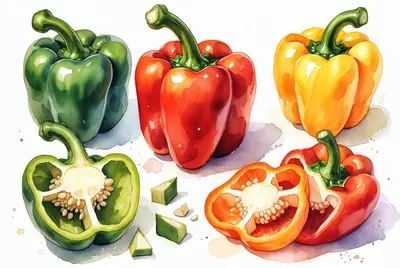
Preparation
Wash the outside well, then slice off a small piece. Always remove the white pith and seeds inside before serving.
Quantity
A small, thin slice (about the size of your hamster's ear), 2-3 times a week is perfect.
Notes
All colors are safe, but they have different nutrient profiles! Red peppers are the sweetest and highest in Vitamin C because they've ripened the longest. Green peppers are less sweet and have a more grassy taste.
Nutritional Benefits
* Absolutely packed with Vitamin C, which is a fantastic immune system booster for your little buddy.
* Full of Vitamin A for good eye health and a glossy coat.
* The crunchiness is great for keeping their constantly growing teeth worn down.
* High water content makes it a hydrating, low-calorie snack.
Safe Varieties
1. Red Bell Pepper: The ripest, sweetest, and most nutritious. Highest in Vitamin C and beta-carotene. A top-tier treat!
2. Orange Bell Pepper: Also very sweet and packed with nutrients. A great colorful alternative.
3. Yellow Bell Pepper: Slightly less sweet than red or orange, but still a fantastic and safe choice.
4. Green Bell Pepper: The least ripe, so it's less sweet and has a slightly more bitter, "grassy" taste. Some hamsters love it, some don't. Totally safe and still healthy!
5. What to Avoid: Any hot peppers like jalapeños, serranos, or chili peppers. The capsaicin that makes them spicy is very painful and dangerous for hamsters.
Feeding Guide
* Syrian Hamster: One slice about 1cm x 1cm, 2-3 times a week.
* Dwarf Hamster: A smaller piece, about half that size, 2-3 times a week.
* Color Rotation: Try offering a different color each week to give them a variety of tastes and nutrients.
Positive Signs
* Enthusiastic nibbling and that adorable "crunch crunch" sound.
* They might show a preference for one color over another—watch for their little personality to come out!
* Normal, healthy poops.
Negative Signs
* Loose stool or diarrhea, which means the portion was too big or too watery.
* They ignore it. Especially with green peppers, some hamsters turn up their nose at the less sweet taste.
* They try to stash a piece that's too big, which could rot. Always cut it small enough that they'll eat it in one go.
Preparation Science
Removing the pith and seeds is essential as these parts are harder to digest and have no nutritional value for them. A thin slice is easy to hold in their dexterous front paws, mimicking how they'd handle food in the wild.
Enrichment Science
The bright colors of bell peppers are visually stimulating for hamsters, who have dichromatic vision. Offering different colors provides novel sensory input, encouraging investigation and interaction with their food.
Play Ideas
Easy: Spear a small pepper slice on a clean, hamster-safe wooden stick or a piece of untreated twig for them to pull off.
Medium: Hide small pepper dices inside a toilet paper roll with some hay for them to forage.
Hard: Use a tiny amount of mashed pepper as a "paint" on a clean ceramic tile to create a lickable, investigable surface.
FAQ
Q: Can I feed my hamster the seeds from inside the pepper?
A: Nope! Bell pepper seeds are safe but they're very hard and not digestible. They could be a choking hazard or get stuck in their pouches. Always scoop them out.
Q: My hamster only likes the red peppers, is that okay?
A: Absolutely! It's fine if they're being picky. Red peppers are the most nutritious anyway, so if they're only eating those, they're still getting a great health boost.
Alternatives
* vs. Cucumber: Both are hydrating and crunchy, but bell peppers are a vitamin powerhouse, especially for Vitamin C, while cucumber is just a water snack.
* vs. Carrot: Carrots are higher in sugar. Bell peppers offer similar crunch with less sugar and more Vitamin C.
* vs. Broccoli: Broccoli is great but can cause gas. Bell peppers are generally easier on the tummy.
* vs. Chili Peppers: There's no comparison! Bell peppers are the only safe pepper. All spicy peppers are strictly off-limits.
Risks & Disclaimer
Bell peppers are one of the safest and healthiest veggies you can offer. Just remember they are a treat, so keep portions small to avoid tummy upset from too much water or fiber. Stick to the sweet bells and skip the spicy stuff, and you're golden!