Quantity
Even a few bites of rhubarb leaf can overwhelm a guinea pig's kidneys. The stalks contain lower concentrations of oxalic acid but are still dangerous at guinea pig body weights. There is no safe amount of any part of the rhubarb plant for guinea pigs.
Notes
Garden play areas are the primary risk. Rhubarb is a popular garden plant that grows at ground level — exactly where guinea pigs graze. They won't distinguish between rhubarb leaves and lettuce. If you grow rhubarb, it must be completely fenced off from any area where your guinea pigs roam. Indoor exposure is rare but possible if someone tosses rhubarb trimmings into a compost bin the pigs can reach.
Negative Signs
* Drooling and pawing at the mouth (oxalates burn oral tissues)
* Refusal to eat — especially hay and hard foods
* Swollen or painful-looking mouth
* Diarrhea
* Lethargy and reluctance to move
* Decreased urination or blood in urine
* Teeth grinding (pain)
* Hunched, immobile posture
FAQ
Q: Why are guinea pigs more vulnerable to rhubarb than other animals?
A: Two reasons. First, guinea pigs can't make their own Vitamin C, which helps protect against oxalate damage in species that can synthesize it. Second, their kidneys are tiny — a dose of oxalic acid that a rabbit or dog could handle overwhelms a guinea pig's renal system. Rhubarb and guinea pigs are a particularly bad combination.
Q: My guinea pig was near rhubarb in the garden but I'm not sure if they ate any. What should I watch for?
A: Watch for drooling, mouth swelling, refusal to eat, decreased urination, and lethargy over the next 24 hours. Check their urine for blood. If anything looks off, call your vet. When in doubt, a vet check is always the safer call.
Alternatives
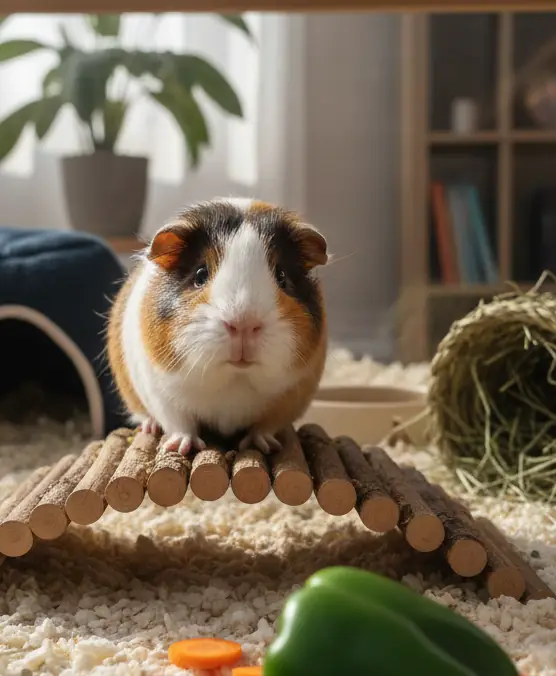
For crunchy, stalk-like texture, celery (cut into small pieces to avoid choking on strings) or a thin strip of bell pepper is a safe, vitamin-C-rich alternative.
Risks & Disclaimer
If your guinea pig ate any part of a rhubarb plant, call your exotic vet immediately — even if it was just the stalk. Guinea pigs are among the most oxalate-sensitive common pets, and kidney damage can begin before symptoms become obvious. The leaves are the most dangerous part, but no part of the rhubarb plant is safe.