Quantity
The solanine concentration varies — green-skinned and sprouted potatoes have much higher levels. Even a few bites of green-skinned potato can cause symptoms in a guinea pig. Normal, non-green raw potato is less concentrated but still shouldn't be fed.
Notes
The most common exposure is kitchen scraps — potato peels with green spots, sprouted potatoes from the pantry, or raw potato scraps from meal prep. Potato plants in gardens are also a risk during outdoor playtime. Even cooked potato, while less toxic, is starchy and inappropriate for guinea pig digestion — it can cause gas and bloating, which are serious concerns for their fragile gut.
Negative Signs
* Diarrhea or loose, watery stool
* Bloated, hard abdomen (extremely dangerous in guinea pigs)
* Drooling and mouth irritation
* Lethargy and weakness
* Confusion or disorientation
* Tremors
* Refusal to eat hay (sign of GI distress)
FAQ
Q: Can guinea pigs eat cooked potato?
A: Cooking reduces solanine, but potato is still a starchy, low-fiber food that guinea pigs don't need and shouldn't eat. Their digestive system is built for hay, leafy greens, and vegetables — not starchy tubers. Even cooked potato can cause gas and bloating, both of which are dangerous for guinea pigs.
Q: My guinea pig ate a small piece of potato peel. Is that an emergency?
A: If the peel was from a normal, non-green potato, a small piece is unlikely to cause severe toxicity — but monitor for bloating, diarrhea, and lethargy. If the peel was green or from a sprouted potato, call your vet.
Alternatives
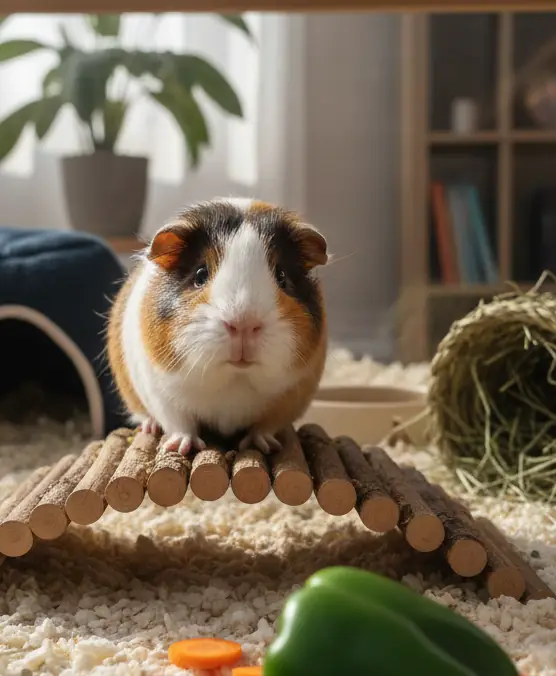
For root-vegetable variety, a small piece of carrot or a slice of sweet bell pepper is safe, appropriate, and much more nutritious for guinea pigs.
Risks & Disclaimer
If your guinea pig ate raw potato, especially any green parts or sprouts, contact your exotic vet. Bloating in guinea pigs can escalate to GI stasis, which is life-threatening. If the belly feels hard or distended, this is an emergency.