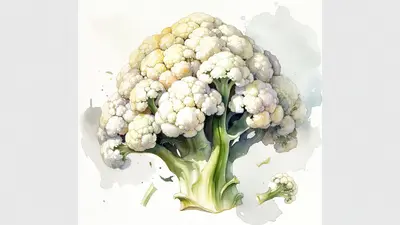
Preparation
Wash thoroughly, chop florets into small pieces, remove thick core, feed raw only — no cooking
Quantity
One small floret or two to three small pieces, once or twice weekly — nutritious but can cause gas if overfed
Notes
Less likely to cause bloating than broccoli, but still a brassica so respect the portions. The white color means less vitamin A but it's still a solid choice. Great for pigs who want variety without the broccoli drama.
Nutritional Benefits
Vitamin C support — not as much as broccoli but still respectable
Fiber for healthy digestion without being too harsh
Vitamin K and folate for blood and cell health
Low calorie and low sugar — safe for weight management
Gentler on tummies than its green cousin broccoli
Safe Varieties
White cauliflower — the standard, mild and widely accepted
Orange or "cheddar" cauliflower — slightly sweeter, more vitamin A
Purple cauliflower — fun color, actually contains anthocyanins
Romanesco cauliflower — beautiful fractal pattern, nutty flavor
Avoid: Cooked cauliflower (mushy, nutrient loss), frozen cauliflower (texture issues), any with brown spots or strong odor, cauliflower leaves (too tough and fibrous)
Feeding Guide
Baby Guinea pigs under 4 months: Skip cauliflower — wait for their digestive systems to mature
Adult pigs 1-2 pounds: One small floret or 2-3 pieces, twice weekly
Senior pigs: Same as adults, good choice for dental issues since it's softer than broccoli
Pigs prone to gas: Once weekly max, or try stems only which are even milder
Positive Signs
Curious sniffing followed by eager munching
No signs of bloating or discomfort within 24 hours
Normal poop production — no gas bubbles or weird smells
Maintaining good appetite for hay and regular veggies
Negative Signs
Soft stools or diarrhea — cut back immediately, some pigs process brassicas poorly
Reduced activity or hunched posture — gas pain, offer hay and water, call vet if it lasts more than a few hours
Refusing to eat it — some piggies find it bland, don't force it
Excessive gas sounds from tummy — funny but uncomfortable for them, reduce portion size
Preparation Science
Raw cauliflower maintains the firm texture that supports dental health while preserving heat-sensitive vitamins. The florets break apart easily, allowing piggies to "forage" smaller pieces from a larger head.
Enrichment Science
The unusual white color provides visual novelty in a diet of green and orange veggies, stimulating curiosity and investigation behaviors that keep your piggy mentally sharp.
Play Ideas
Easy: Scatter small cauliflower pieces in hay for a treasure hunt
Medium: Use a cauliflower floret as a "ball" to roll and chase before eating
Hard: Create a veggie snowman using cauliflower florets held together with safe wooden skewers for a destructible sculpture
FAQ
Q: Is cauliflower just white broccoli?
A: They're cousins — both brassicas — but cauliflower is milder and usually causes less gas. Think of broccoli as the bold, intense sibling and cauliflower as the chill, easygoing one. Nutrition-wise, broccoli wins on vitamin C, but cauliflower is gentler on sensitive tummies.
Q: My Guinea pig ignores cauliflower — is it bad?
A: Cauliflower is pretty mild in flavor, so some piggies find it boring compared to peppers or carrots. Try mixing it with something tasty like cilantro to spark interest, or just accept that your piggy has sophisticated tastes and stick to what they love.
ALTERNATIVES_COMPARITIES:
Broccoli has more vitamin C but more gas potential — cauliflower is the safer brassica choice
Bell pepper beats both on vitamin C with zero gas risk — the daily winner
Cabbage is similar to cauliflower in gas risk — rotate these rather than feeding together
Zucchini is even milder and good for daily feeding — use cauliflower for weekly variety
Risks & Disclaimer
Cauliflower is generally safe but still a brassica vegetable that can cause gas in sensitive individuals. Start small, watch for 24 hours, and remember that variety is key — no single vegetable should dominate your Guinea pig's diet. When fed properly, it's a great addition to the rotation.