Preparation
Wash well, tear or chop into guinea-pig-sized pieces. Serve raw — never cooked. Remove any yellowed or slimy leaves.
Quantity
A leaf or two with stalk, 3-4 times per week. One of the few greens where calcium is highly bioavailable, so it's great for guinea pigs — just rotate with other veggies for variety.
Notes
Unlike spinach and kale, bok choy is very low in oxalates. That means the calcium your guinea pig eats actually gets absorbed instead of being blocked. This makes it an excellent choice for piggies, especially those who need calcium support without the bladder sludge risk.
Nutritional Benefits
* Excellent bioavailable calcium — around 50% absorption rate, far better than spinach's measly 5%
* Good source of vitamin C — crucial since guinea pigs can't produce their own
* Contains vitamin A for healthy eyes, skin, and immune response
* Provides vitamin K for blood clotting and bone metabolism
* Low in oxalates, so minerals are absorbed efficiently without kidney/bladder risk
Safe Varieties
1. Regular bok choy — the classic, great ratio of stalk to leaf
2. Baby bok choy — more tender, perfect portion size for one or two piggies
3. Shanghai bok choy — green stems, slightly milder, equally nutritious
4. Tatsoi — spoon-shaped leaves, same family, safe and tasty
Feeding Guide
One or two leaves with stalk per guinea pig per serving.
Offer 3-4 times per week — frequent enough to be a rotation staple.
Mix with bell pepper (vitamin C powerhouse) and romaine for a balanced daily salad.
New to bok choy? Start with one small piece and check droppings the next day before increasing.
Positive Signs
* Eager crunching on the stalks — that snap is very satisfying for piggies
* Happy wheeks when they see it coming — the universal guinea pig approval sound
* Firm, normal droppings with no changes
* Good energy levels and bright, curious behavior
Negative Signs
* Loose droppings — uncommon with bok choy but possible if too much is given at once
* Gas or bloating — mild brassica effect in sensitive piggies; reduce to every other day
* Refusing it entirely — some piggies are slow to accept new textures; try just the leafy part first
* Uneaten pieces going slimy — remove within a few hours
Preparation Science
Bok choy's low oxalate content is the key to its nutritional superiority over spinach for small herbivores. Oxalates bind calcium in the gut and prevent absorption; without that interference, bok choy delivers calcium where it's needed — bones, teeth, and overall metabolic function.
Enrichment Science
The two-texture experience — crunchy stalk plus soft leaf — gives guinea pigs different sensory feedback in a single food, which mimics the variety they'd encounter foraging wild plants. It keeps mealtime interesting rather than monotonous.
Play Ideas
Easy: Stand a bok choy stalk upright in a small ceramic bowl — your piggy has to figure out how to pull it out.
Medium: Tuck bok choy leaves into a hay pile so your guinea pig forages through to find them.
Hard: Thread alternating bok choy and bell pepper pieces onto a veggie skewer — a colorful guinea pig salad bar on a stick.
FAQ
Q: Is bok choy better than spinach for guinea pigs?
A: For frequent feeding, absolutely. Bok choy has much better calcium absorption (low oxalates) and carries less bladder sludge risk. Spinach is fine occasionally, but bok choy can go in the rotation 3-4 times a week without worry.
Q: Can I feed my guinea pig the whole bok choy plant?
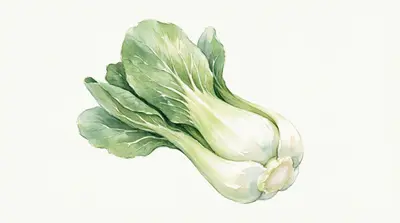
A: Yes — leaves, stalks, and all. Most piggies love the crunch of the white stalk and the softness of the green leaves. Just wash it well and chop to manageable pieces. The only part to skip is any yellowed or slimy outer leaves.
Alternatives
* Romaine lettuce — safe daily green, very hydrating, but lower in calcium and vitamins than bok choy
* Kale — nutrient-dense but high in oxalates; bok choy is the safer frequent-feeding choice
* Bell pepper — the vitamin C champion; pair with bok choy for a calcium + C combo
* Spinach — similar vitamins but oxalates block calcium; bok choy wins for absorption
Risks & Disclaimer
Bok choy is one of the safest and most nutritious greens for guinea pigs. Its low oxalate content makes it a better calcium source than most leafy greens. Just rotate it with other veggies for a balanced diet and you're all set.