Preparation
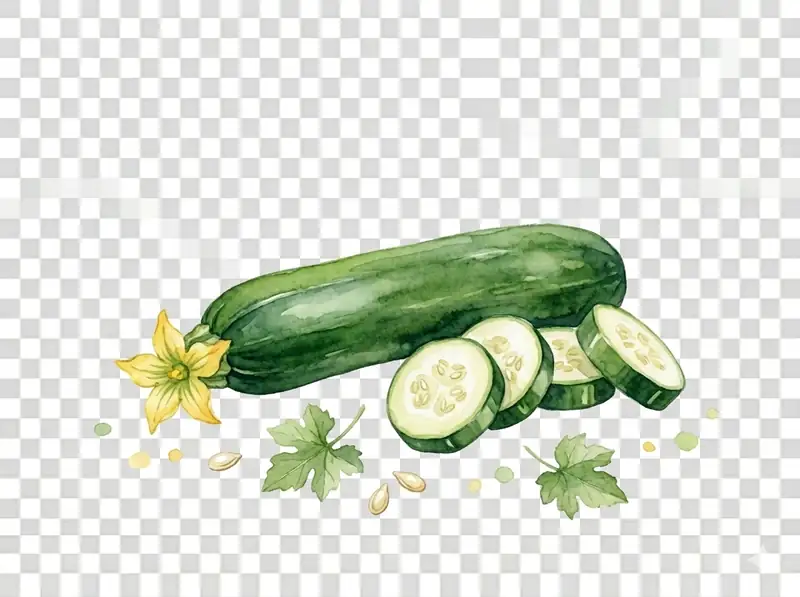
Wash thoroughly, slice into thin coins or half-moons (no thicker than a pencil). Blanch for 30–60 seconds to soften for smaller fish. No seasoning, no oil — just plain zucchini. Remove any uneaten pieces after 24 hours to protect water quality.
Quantity
A coin-sized slice per 5–10 gallons, 2–3 times per week, is plenty. Bottom feeders and herbivores can have it more often; omnivores treat it as a supplement, not a staple.
Notes
Zucchini is fantastic for herbivores and algae eaters — plecos, snails, mystery snails, and bristlenose catfish absolutely go wild for it. Bettas and carnivore-heavy tanks might ignore it, and that's fine too.
Nutritional Benefits
* Loaded with vitamin C to keep your fish's immune system ticking along nicely
* Provides vitamin B6, which supports healthy nerve function and a steady metabolism
* High water content keeps things gentle on digestion — great for fish prone to bloat
* Potassium helps regulate fluid balance, which matters more than you'd think in an aquatic animal
* Low in calories and sugar, so it's a guilt-free snack that won't spike waste levels
Safe Varieties
1. Standard green zucchini — the classic, widely available, and universally accepted by fish
2. Yellow zucchini — same nutritional profile, slightly sweeter; fish don't seem to care about the color
3. Baby zucchini — naturally smaller and more tender, great for nano tanks and small fish
Feeding Guide
One thin slice (about the size of a large coin) per 5–10 gallons of tank water, offered 2–3 times per week.
For nano tanks (under 10 gallons), half a slice is more than enough — you don't want it rotting before it's eaten.
Herbivore-heavy tanks with plecos or bristlenose can receive daily portions; just keep an eye on water parameters.
Remove any uneaten zucchini within 24 hours — after that it starts breaking down and will cloud your water.
Positive Signs
* Fish (especially bottom feeders) swarming the slice within minutes of it hitting the water
* Plecos and catfish latching onto the skin side and rasping away happily
* Snails joining the party — a slice covered in snails is basically a success story
* Fish looking active and colorful with no signs of digestive upset after feeding
Negative Signs
* Zucchini sitting untouched for several hours — this is fine for carnivores, but remove it before it rots
* Cloudy or milky water after feeding, which usually means a piece was left too long
* Fish appearing bloated or lethargic, which can happen if pieces are too large and swallowed whole
* Any unusual swimming behavior — though this is rarely linked to zucchini specifically
Preparation Science
Blanching softens the cell walls, making zucchini easier for small mouths to break down while also helping it sink faster — raw zucchini floats, which is less useful for bottom-dwelling species. A quick 30–60 second blanch (no longer!) preserves the nutrients while making it accessible.
Enrichment Science
Foraging is a core behavior for many freshwater fish, and offering a physical food item they can rasp, nibble, and explore satisfies that instinct in a way flake food simply can't. The textured skin of zucchini gives fish something to work against, which is genuinely stimulating for species like plecos that are built to scrape surfaces.
Play Ideas
Easy: Drop a raw slice in and watch it float — surface-feeding fish like bettas can nibble from the top while it slowly waterlogs and sinks.
Medium: Blanch a slice and skewer it with a veggie clip or a toothpick weighted with a pebble so it hovers mid-water, drawing in fish from all levels.
Hard: Cut zucchini into different shapes and sizes, then hide them at different depths and spots around the tank decor to encourage your fish to seek out food the way they would in the wild.
FAQ
Q: My pleco went crazy for zucchini but my betta completely ignored it — is that normal?
A: Totally normal. Bettas are carnivores at heart and don't really do vegetables. Your pleco is an algae-scraping machine who lives for this stuff. Feed them separately if needed.
Q: Do I really need to blanch it, or can I just drop it in raw?
A: Raw works fine for medium and large fish — it'll float at first but eventually sink. Blanching is better for small fish or species that need soft food, and it makes the slice sink faster so your bottom feeders get first dibs.
Alternatives
* Cucumber — similarly mild and popular, but higher water content means it breaks down faster; great swap if you're out of zucchini
* Peas (shelled, blanched) — the gold standard for buoyancy issues in goldfish; more medicinal than zucchini but less of a "snack" food
* Spinach — more nutritionally dense but wilts quickly and can cloud water faster; better as an occasional treat than a regular offering
* Algae wafers — more shelf-stable and convenient, but don't provide the foraging enrichment that a real vegetable does
Risks & Disclaimer
Zucchini is one of the safest vegetables you can offer freshwater fish, but the biggest risk is always water quality — any uneaten plant matter left too long will decompose and spike ammonia levels. Stick to small portions, remove leftovers promptly, and your tank stays clean and your fish stay happy.