Preparation
Culture clean or buy frozen, rinse thoroughly.
Quantity
A scoop or teaspoon, 2-4 times weekly – monitor consumption.
Notes
Great for fry and small mouths, natural gut loader.
Nutritional Benefits
* Protein for quick growth.
* Fiber from shells aids digestion.
* Omega fatty acids for brains.
* Vitamins enhance immunity.
* Low fat keeps slim.
Safe Varieties
1. Cultured live daphnia – fresh and safe.
2. Frozen packs – convenient.
3. Freeze-dried – easy store.
4. Moina (similar) – alternative species.
Avoid pond-collected – pollutants possible.
Feeding Guide
Fry: daily small clouds.
Small adults: teaspoon tri-weekly.
Community tanks: moderate to avoid overfeed.
Conditioning breeders: extra.
Positive Signs
* Frenzied feeding fun.
* Rapid fry development.
* Clear healthy eyes.
* Energetic jumps.
Negative Signs
* Too many escape? Reduce number.
* If bloating, space feeds.
* Water dirties – filter boost.
* No interest – try live.
ENRICHMENT_SCIENCE_NOTES: Hopping motion triggers pursuit, honing reflexes like in lakes. It enlivens dull days.
PREPARATION_SCIENCE: Clean culturing prevents bacteria, ensuring pure protein.
Preparation Science
Clean culturing prevents bacteria, ensuring pure protein.
Enrichment Science
Hopping motion triggers pursuit, honing reflexes like in lakes. It enlivens dull days.
Play Ideas
Easy: Pour in swarm.
Medium: Release in sections.
Hard: Culture your own tank.
FAQ
Q: Good for baby fish?
A: Perfect size – they thrive.
Q: Cause allergies?
A: Rare – watch first feed.
Alternatives
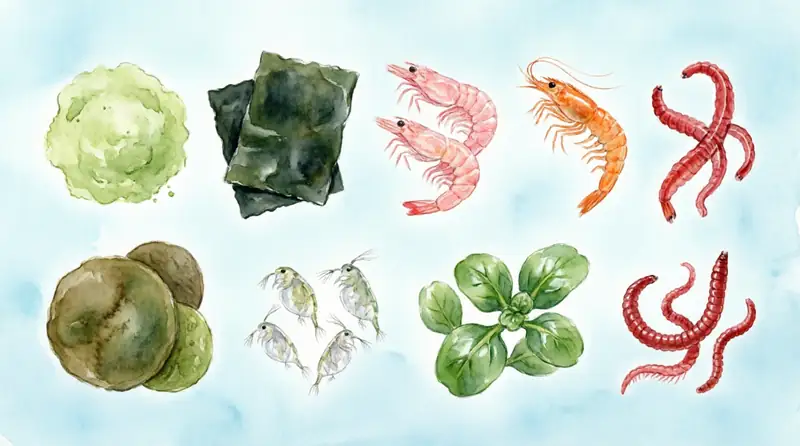
* Smaller than bloodworms, better for fry.
* Like brine but freshwater.
* Less fatty than mysis.
* Veggie alt: pea shoots.
RISK_DISCLAIMER: Daphnia's natural, but dirty sources risk infections – source well. Your fish chase with joy!
Risks & Disclaimer
Daphnia's natural, but dirty sources risk infections – source well. Your fish chase with joy!