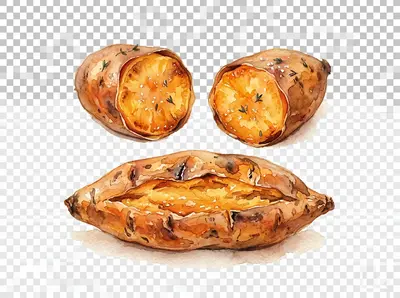
Preparation
Always cook it first — steamed or baked with no seasoning, butter, or oil. Peel it, cut into bite-sized pieces, and never serve raw. Raw sweet potato is hard to digest and a choking hazard for smaller dogs.
Quantity
Treats should make up no more than 10% of your dog's daily calories. For a medium dog (about 25 lbs), a couple of tablespoons of cooked sweet potato a few times a week is plenty. Larger dogs can handle a bit more; toy breeds should get just a few small pieces.
Notes
Sweet potato is one of the best starchy treats you can give your dog — but keep an eye on quantity if your dog is prone to weight gain or has diabetes, since the natural sugars add up. Dogs with kidney issues should check with a vet first due to the oxalate content.
Nutritional Benefits
* Loaded with beta-carotene, which your dog's body converts to vitamin A — great for eye health, immune function, and a shiny coat
* High in dietary fiber, which keeps their digestive system running smoothly and can ease both constipation and loose stools
* Good source of vitamin C and vitamin B6, helping with immune defence and brain health
* Contains potassium and manganese, which support healthy muscles, nerves, and bone development
* Naturally low in fat, so it's a guilt-free snack for dogs watching their waistline
Safe Varieties
1. Plain baked or steamed sweet potato — best option, no additives, easy to digest
2. Dehydrated sweet potato chews (store-bought, no seasoning) — great for teething or chewing enrichment
3. Mashed sweet potato (plain, no butter or salt) — good for mixing into kibble or stuffing a Kong
4. Raw sweet potato (small amounts only) — technically not toxic but tough on digestion; not recommended as a regular choice
Feeding Guide
Small dogs (under 15 lbs): 1–2 teaspoons of cooked sweet potato, 2–3 times a week.
Medium dogs (15–40 lbs): 1–2 tablespoons, a few times a week.
Large dogs (40 lbs+): Up to a quarter cup, a few times a week.
Puppies: Fine in small amounts once fully weaned; keep portions tiny — their digestive systems are still figuring things out.
Dogs with diabetes or obesity: Limit or avoid due to the natural sugar content. Ask your vet.
Positive Signs
* Enthusiastic eating — that happy, focused eating pace means they love it and it's sitting well
* Firm, well-formed stools in the days after feeding — the fiber is doing exactly what it should
* Bright eyes and a glossy coat over time — the beta-carotene is working its magic
* Energy stays steady rather than spiking — a good sign the sugars are being processed well
Negative Signs
* Soft stools or mild diarrhea after a first serving — usually means you gave a bit too much; just cut back next time
* Gassiness or bloating — some dogs take a little time to adjust to the fiber; start with smaller amounts
* Weight creeping up slowly — sweet potato is calorie-dense for a vegetable; keep an eye on total treat intake
* Increased thirst in diabetic dogs — a sign the sugar content may be affecting blood glucose; check with your vet
Preparation Science
Cooking sweet potato breaks down the tough cell walls and starch granules, making the nutrients far more bioavailable — your dog actually absorbs more beta-carotene from cooked sweet potato than raw. It also softens it enough to prevent choking and eliminates the harder-to-digest raw starch that can upset their stomach.
Enrichment Science
Sweet potato's strong natural scent and sweet flavor engage your dog's powerful nose and reward pathways simultaneously, making it excellent for scent games and food puzzles. The act of working for a high-value food like this triggers problem-solving behavior that's mentally tiring in the best possible way.
Play Ideas
Easy: Stuff a small amount of mashed sweet potato into a Kong and serve it fresh — instant occupied dog.
Medium: Freeze mashed sweet potato in a Kong or silicone mold for a long-lasting lick toy on a hot day.
Hard: Hide small dehydrated sweet potato pieces around the house or yard in escalating difficulty spots for a full nose-work session.
FAQ
Q: Can my dog eat sweet potato skin?
A: Technically yes, but it's better to peel it. The skin is hard to digest and can be tough on their stomach, especially if they inhale their food like most dogs do.
Q: Is sweet potato better than regular potato for dogs?
A: Yes, noticeably. Sweet potato wins on nutrition — more fiber, more vitamins, more antioxidants. Regular white potato is fine occasionally but offers much less. If you're going to give a starchy treat, sweet potato is the better call.
Q: My dog ate raw sweet potato. Should I be worried?
A: Probably not, unless they ate a lot. Raw sweet potato isn't toxic, but it can cause digestive upset or be a choking hazard if swallowed in chunks. Keep an eye on them and cook it next time.
Alternatives
* Pumpkin — lower in sugar than sweet potato, excellent for digestive upset, great for dogs with sensitive stomachs; less nutritionally dense overall but a solid swap
* Regular potato (cooked, plain) — fine occasionally but much lower in vitamins and fiber; never serve green or raw potato as it contains solanine
* Butternut squash — very similar nutritional profile to sweet potato, slightly lower in sugar; a good alternative for diabetic-prone dogs
* Carrots — lower calorie and lower sugar than sweet potato, great for everyday snacking; less fiber but crunchy and satisfying raw
Risks & Disclaimer
Sweet potato is genuinely one of the safest and most nutritious treats you can give your dog — just keep it plain, cooked, and in sensible amounts. Dogs with diabetes, kidney disease, or weight issues should have their vet weigh in on how often to serve it.