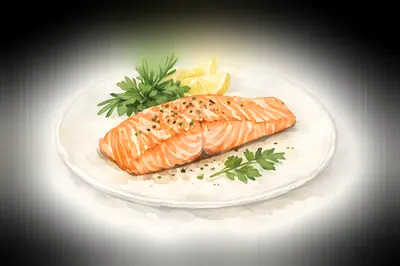
Preparation
Always cook salmon thoroughly — never serve it raw or undercooked. Raw salmon can carry a parasite that causes salmon poisoning disease, which can be fatal in dogs. Remove all bones. No seasoning, lemon, butter, or sauces. Bake, steam, or poach plain.
Quantity
Small dogs (under 10kg): about a tablespoon of cooked, flaked salmon. Medium dogs (10-25kg): 2-3 tablespoons. Large dogs (25kg+): up to a quarter cup.
Notes
Canned salmon (in water, no salt added) is a convenient option — just check for and remove any soft bones. Smoked salmon is too high in salt for dogs. Salmon skin is fine if cooked, but it's fatty — go easy.
Nutritional Benefits
* Omega-3 fatty acids (EPA and DHA) work wonders for coat shine, skin health, and joint support
* High-quality protein supports lean muscle
* Vitamin D helps with calcium absorption and bone strength
* B12 keeps the nervous system healthy
* Selenium boosts the immune system and supports thyroid function
Safe Varieties
1. Baked salmon fillet — cook plain until it flakes easily, remove all bones
2. Poached salmon — gentle cooking method that keeps the fish moist
3. Steamed salmon — retains nutrients well, easy to flake
4. Canned salmon in water — convenient, affordable, and still nutritious
5. Cooked salmon skin — fine as an occasional treat, but it's high in fat
Feeding Guide
Small dogs (under 10kg): About a tablespoon of flaked, cooked salmon.
Medium dogs (10-25kg): 2-3 tablespoons once or twice a week.
Large dogs (25kg+): Up to a quarter cup a couple of times a week.
Puppies: A teaspoon of well-cooked, carefully deboned salmon.
Positive Signs
* A noticeably shinier, softer coat within a few weeks
* Less itching and fewer dry skin patches
* Enthusiastic eating — most dogs find salmon irresistible
* Good energy and healthy joints, especially in older dogs
Negative Signs
* Vomiting or diarrhoea — the fat content can be too rich for some dogs
* Fishy breath that lingers excessively — normal to a degree, but dial back if it's overpowering
* Allergic reaction (itching, swelling) — fish allergies exist but are uncommon
* Lethargy or fever after raw salmon — this is an emergency, get to a vet immediately
Preparation Science
Cooking salmon to an internal temperature of 63°C (145°F) kills the Neorickettsia helminthoeca parasite that causes salmon poisoning disease. Baking at moderate heat preserves the most omega-3 content. Canned salmon is already cooked and safe.
Enrichment Science
The strong aroma of salmon is incredibly stimulating for dogs. Fish protein triggers a different scent profile than poultry or red meat, which adds exciting variety to your dog's sensory world at mealtime.
Play Ideas
Easy: Flake cooked salmon over their regular food for a gourmet dinner upgrade.
Medium: Mix flaked salmon with sweet potato and freeze into treat-sized bites.
Hard: Spread salmon mixed with plain yogurt inside a Kong, freeze it, and let them work at it.
FAQ
Q: Can dogs get salmon poisoning disease?
A: Yes — it's caused by a parasite found in raw salmon, especially from the Pacific Northwest. It can be fatal if untreated. The simple fix? Always cook salmon thoroughly. Cooked salmon is completely safe.
Q: Is canned salmon okay for dogs?
A: Yes, as long as it's canned in water with no added salt. It's actually a super convenient and affordable way to give your dog omega-3 benefits. Just check for small bones before serving.
Alternatives
* Sardines — similar omega-3 benefits in a smaller package, watch for salt in canned versions
* Chicken — leaner and more affordable, but lacks the omega-3 punch
* Turkey — another lean protein, but without the fatty acid benefits
* Fish oil supplement — concentrated omega-3s without the hassle of cooking fish
Risks & Disclaimer
Cooked salmon is safe and incredibly beneficial for dogs. The critical rule: never serve it raw. Cook it through, remove bones, skip the seasoning, and your dog gets one of the most nutritious proteins available.