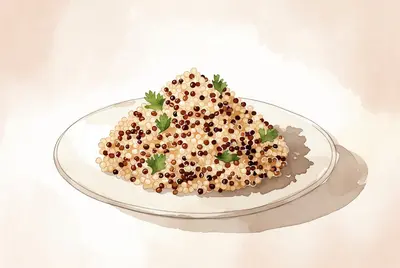
Preparation
Rinse thoroughly before cooking to remove the bitter saponin coating on the outside. Cook plain in water until fluffy. No seasoning, butter, or stock. Let it cool completely before serving.
Quantity
Small dogs (under 10kg): a teaspoon to a tablespoon. Medium dogs (10-25kg): 2-3 tablespoons. Large dogs (25kg+): up to a quarter cup.
Notes
The saponin coating can cause stomach irritation if not rinsed off properly. Some dogs take a meal or two to adjust to quinoa, so start small. It's already showing up in some premium commercial dog foods.
Nutritional Benefits
* Complete protein — contains all nine essential amino acids
* Rich in fibre for healthy digestion
* Iron and magnesium support blood health and muscle function
* B vitamins boost energy metabolism
* Naturally gluten-free — great for dogs with wheat sensitivities
Safe Varieties
1. White quinoa (cooked and rinsed) — mildest flavour, most digestible
2. Red quinoa (cooked and rinsed) — slightly nuttier, same nutritional punch
3. Black quinoa (cooked and rinsed) — earthiest flavour, highest in antioxidants
4. Tri-colour quinoa mix — a blend that works perfectly fine
5. Quinoa flakes (cooked) — quicker cooking option, same nutrition
Feeding Guide
Small dogs (under 10kg): Start with a teaspoon, work up to a tablespoon.
Medium dogs (10-25kg): 2-3 tablespoons mixed into regular food.
Large dogs (25kg+): Up to a quarter cup as a meal topper.
Puppies: A teaspoon of well-cooked, well-rinsed quinoa to start.
Positive Signs
* Normal stools and no digestive upset
* Good energy and muscle condition
* Eats it without hesitation when mixed into food
* Steady weight and healthy coat
Negative Signs
* Vomiting or drooling — saponin may not have been rinsed off well enough
* Diarrhoea or loose stools — too much too soon, reduce the amount
* Gas or bloating — their gut is adjusting, go slower
* Refusing to eat — the texture isn't for every dog
Preparation Science
Rinsing quinoa under cold water for at least 30 seconds removes saponins — natural compounds that taste bitter and can irritate the gut. Cooking until the little tail-like germ separates from the seed means it's fully done and easy to digest.
Enrichment Science
The small, pebbly texture of quinoa adds novelty to your dog's food bowl. Even subtle changes in food texture keep mealtime engaging and can help stimulate a dog's natural curiosity around food.
Play Ideas
Easy: Stir cooked quinoa into their regular kibble for added protein and texture.
Medium: Mix quinoa with mashed sweet potato and freeze into small treat balls.
Hard: Create a frozen Kong layer cake — quinoa, then plain yogurt, then blueberries, frozen solid.
FAQ
Q: Is quinoa really safe for dogs?
A: Absolutely. Quinoa is actually an ingredient in some high-quality commercial dog foods. Just rinse it well, cook it thoroughly, and introduce it slowly.
Q: Why does my dog sometimes react to quinoa?
A: Most likely the saponin coating wasn't fully rinsed off. That bitter outer layer can cause nausea or stomach irritation. Give it a thorough rinse under running water before cooking and the problem usually disappears.
Alternatives
* Brown rice — more familiar and easier to digest, but lower in protein
* Oatmeal — great fibre source but not a complete protein like quinoa
* Lentils — high protein and fibre, but can cause more gas
* Millet — similarly gluten-free with decent nutrients, milder flavour
Risks & Disclaimer
Quinoa is safe for most dogs when properly rinsed and cooked. Start with small amounts to make sure your dog tolerates it well. Avoid for dogs with a known sensitivity, and always serve plain.