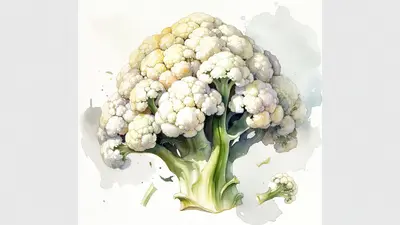
Preparation
Raw or cooked, both are fine. No seasoning, butter, cheese, or sauces. Cut into small pieces for small dogs. Leaves and stems are safe but should be chopped — the stem can be tough.
Quantity
A few florets as a treat or mixed into meals, a few times a week. Like all brassicas, too much can cause gas, so moderate portions are the way to go.
Notes
Cauliflower is in the same family as broccoli but contains lower levels of isothiocyanates, making it slightly gentler on the digestive system. Still a gas-producer in larger quantities though — if your dog is already prone to flatulence, introduce slowly and keep portions small.
Nutritional Benefits
* Good source of Vitamin C — antioxidant support for the immune system
* Contains Vitamin K — important for blood clotting and bone health
* Rich in dietary fibre — supports digestive regularity and helps dogs feel satisfied
* Provides choline — a nutrient that supports brain function, liver health, and muscle movement
* Low in calories — excellent treat option for dogs on a weight management plan
Safe Varieties
1. Raw cauliflower florets — crunchy, low-calorie, great for treat training; cut small for safety
2. Steamed cauliflower — softer texture, easier on sensitive stomachs, slightly better nutrient absorption
3. Roasted cauliflower (plain, no oil or seasoning) — brings out a slightly sweeter flavour some dogs prefer
4. Cauliflower stems — safe to eat, just chop into small pieces since they're denser than florets
5. Avoid: cauliflower cheese, cauliflower rice with garlic/onion, or any prepared cauliflower dish with added seasoning
Feeding Guide
Small dogs (under 10kg): 1-2 small florets per serving is plenty.
Medium dogs (10-25kg): 3-4 florets mixed into food or as a standalone snack.
Large dogs (25kg+): A small handful of florets — they can handle more, but gas becomes more likely with larger amounts.
Puppies: Start with one tiny steamed floret. Wait a day, check for digestive reactions, then gradually include in their treat rotation.
Positive Signs
* Happily crunches through florets without any digestive complaints
* Normal stools and no excessive gas in the 24 hours after eating
* Willingly accepts cauliflower as a treat — some dogs genuinely enjoy the mild flavour
* Maintains good energy levels and healthy appetite for regular meals
Negative Signs
* Increased flatulence — the most common side effect; reduce the amount or frequency
* Loose stools — too much fibre at once; ease back on portion size
* Bloating or visible discomfort — stop feeding cauliflower and monitor; contact your vet if it persists
* Turning their nose up at it — not every dog is a fan, and that's perfectly fine
Preparation Science
Steaming cauliflower for 4-6 minutes breaks down the cell structure enough to make nutrients more bioavailable while preserving most of the Vitamin C content. Raw cauliflower retains slightly more nutrients overall but is harder to digest. For dogs with sensitive stomachs, steamed is always the safer bet.
Enrichment Science
The dense, crumbly texture of cauliflower florets gives dogs a different chewing experience than most treats. As they bite into a floret, it breaks apart into smaller pieces that scatter — this creates a mini-foraging moment as your dog picks up the fragments, engaging their nose and brain alongside their jaw.
Play Ideas
Easy: Toss a few raw cauliflower florets on the floor and let your dog chase and crunch them — simple, fun, and mess-free.
Medium: Mix small cauliflower pieces into a puzzle feeder with their regular kibble for added texture variety.
Hard: Freeze steamed cauliflower pieces into a Kong layered with a thin smear of plain yogurt — a cold, multi-texture challenge.
FAQ
Q: Is cauliflower better than broccoli for dogs?
A: They're very similar nutritionally, but cauliflower has lower levels of isothiocyanates, so it's slightly less likely to cause gastric irritation. If your dog gets gassy from broccoli, cauliflower might be the gentler alternative.
Q: Can cauliflower cause bloat in dogs?
A: Excessive cauliflower can cause gas and mild bloating due to the fibre and raffinose (a complex sugar). This is uncomfortable but not the same as gastric bloat (GDV), which is a life-threatening emergency. If your dog shows signs of severe bloating, distress, or a swollen abdomen, call your vet immediately regardless of what they've eaten.
Alternatives
* Broccoli — more nutrient-dense but higher isothiocyanate risk; cauliflower is the gentler choice for regular feeding
* Green beans — similar calorie profile, less gas risk, widely tolerated; great everyday alternative
* Zucchini — ultra-mild, very low calorie, almost zero gas risk; less nutritious but safer for gas-prone dogs
* Carrot — sweeter, more universally loved, no gas concerns; cauliflower wins on lower sugar content
Risks & Disclaimer
Cauliflower is safe for dogs in moderate amounts. The main risk is gas and digestive discomfort from overfeeding, especially in dogs not accustomed to high-fibre foods. Introduce gradually, keep portions reasonable, and avoid any prepared cauliflower dishes with added ingredients. Plain and simple is the rule.