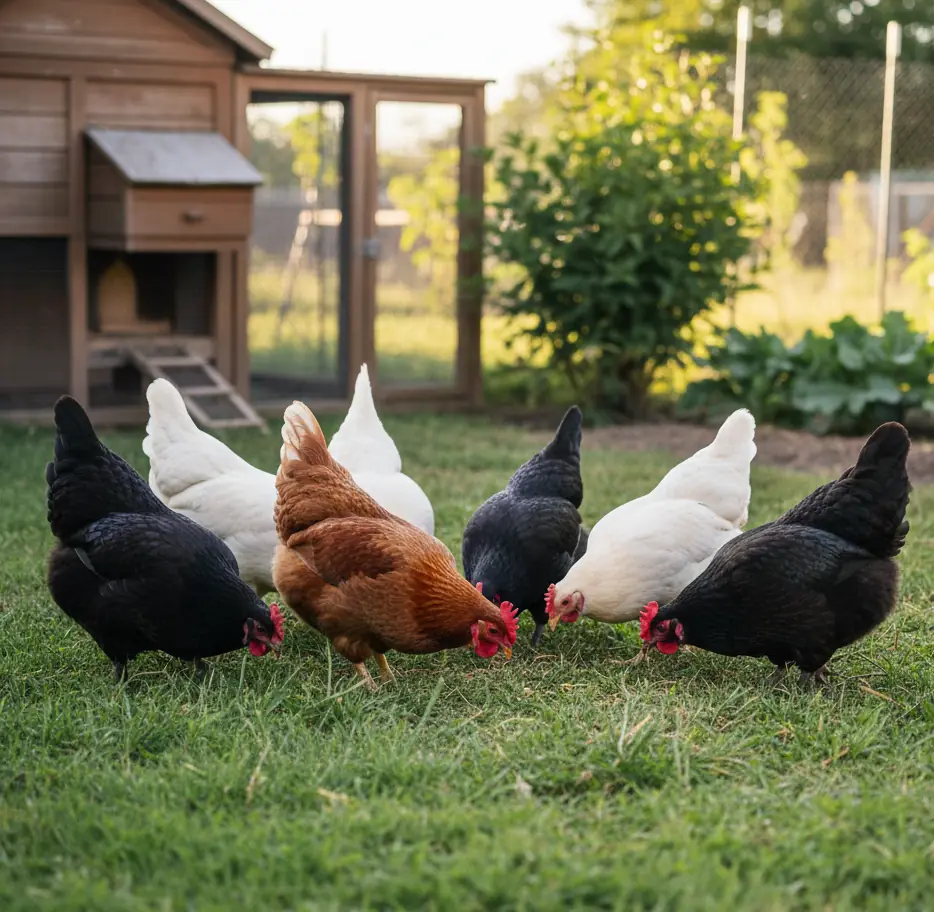
Compressed energy nuggets designed to keep your flock exploring the back forty instead of loitering by the coop door like feathered couch potatoes.
Drain the soaked wheat berries and split peas thoroughly — squeeze them in a clean towel if needed. Excess moisture will make the pellets crumble instead of hold.
Pulse the drained wheat and peas in a food processor until you get a thick, chunky paste. Don't puree it smooth — you want texture, like a rough peanut butter with visible grain chunks.
Add the ground flaxseed, sunflower hearts, melted coconut oil, and dried oregano. Pulse a few more times until everything is just combined. The mixture should hold together when you squeeze a handful.
Roll the mixture into marble-sized balls (about 1 inch diameter) and place them on a parchment-lined baking sheet. You should get roughly 30-40 pellets per batch.
Bake at 150°C (300°F) for 30-35 minutes until the outside is firm and dry to the touch. They'll harden further as they cool. Resist the urge to crank the heat — low and slow keeps the oils from going rancid.
Let them cool completely on the tray before storing. They should feel dense and solid, like little hacky sacks.
Scattered across the yard at dawn, before you let them out
Free-ranging chickens are healthier, lay better eggs, and have richer lives — but some flocks develop "coop gravity," that frustrating tendency to hang around the door waiting for handouts instead of actually ranging. These pellets are designed to be scattered far and wide across your property, creating a treasure hunt that rewards exploration. The slow-release energy means they keep moving instead of eating one pile and shuffling back to base camp.
Best for flocks with access to large yards, pasture, or orchard space who aren't using it. Also excellent for rotational grazing setups where you want the flock to work a new paddock. Scatter a trail of these like breadcrumbs and watch the whole flock follow them into territory they've been ignoring.
Dense, dark brown nuggets about the size of a large marble — firm enough to hold their shape when tossed across grass but soft enough to break apart when pecked aggressively. They smell like toasted grain and have a slightly oily sheen from the fat content. When you throw one, it bounces once and sits in the grass like a little dirt clod, which is exactly the kind of thing chickens can't resist investigating.
Won't protect free-ranging birds from predators. If your flock won't range because they've been attacked before, the solution is better fencing and overhead cover, not tastier snacks.
Behavioral change (increased ranging distance) within 3-5 days of consistent use. Improved egg yolk color from increased foraging within 1-2 weeks.
Make sure pellets are fully cooled and firm before scattering. Soft, warm pellets will disintegrate in wet grass and become a moldy mess.
Don't scatter near roads, property boundaries, or areas with known predator cover. You're luring your birds outward — make sure "outward" is safe.
Check for pellets that didn't get eaten by end of day. Wet pellets left overnight attract rodents, and rodents attract snakes. Clean up what the flock doesn't find.
Easy: Scatter a trail from the coop door out to the middle of the yard — the breadcrumb approach.
Medium: Hide pellets in different locations each day — under bushes, near fence lines, in tall grass patches. The flock will learn to explore new areas because the reward moves.
Hard: Use a "pellet launcher" (a.k.a. throw them as far as you can in different directions) to distribute them across maximum acreage. Your flock will fan out like a search party and cover ground they've never touched.
Start close and gradually increase the scatter radius over a week. If you throw pellets 200 yards on day one, your timid hens won't follow. Start at 20 feet, then 40, then 60.
These work brilliantly in rotational grazing. Scatter pellets in the new paddock the morning you open the gate — instant motivation to explore fresh ground.
Morning scatter is better than evening. You want the flock ranging all day, not sprinting to find snacks as they're heading to roost.
The food processor is the hardest part of this recipe. If you don't have one, you can mash the soaked grains with a potato masher — it just takes longer and builds character.
Keep a batch in a jar by the back door. Tossing a handful across the yard every morning becomes a satisfying ritual, and your birds will start ranging farther on their own once the habit is established.