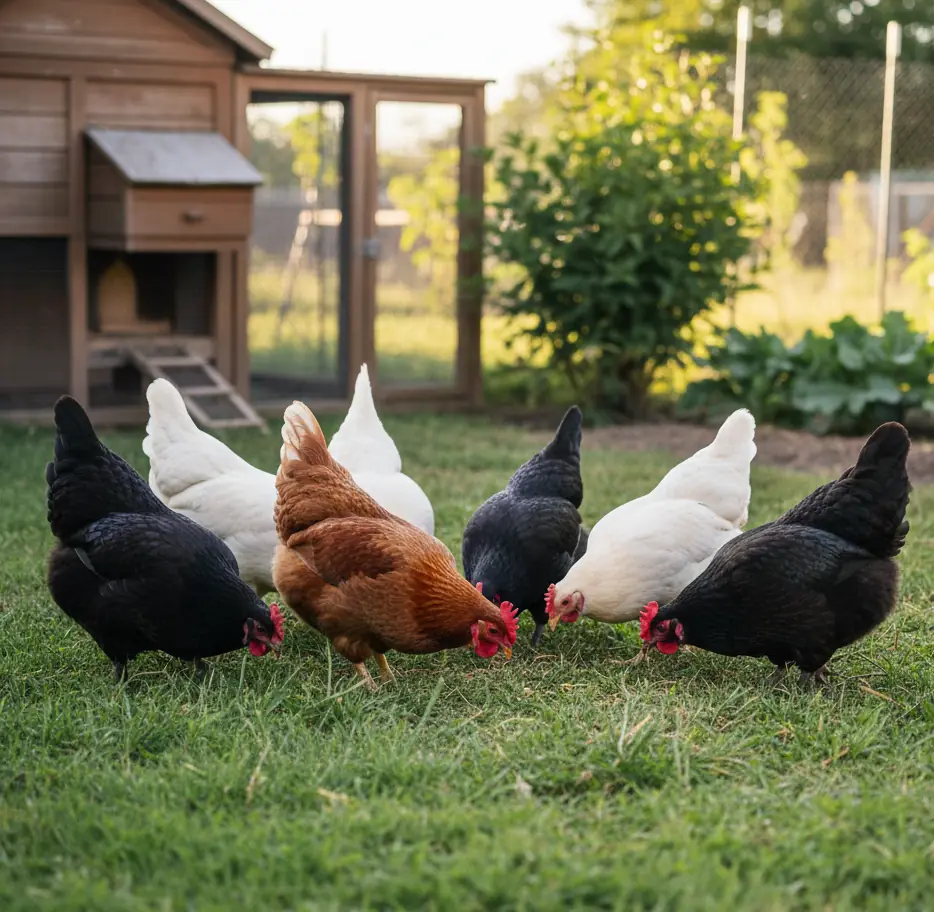
Preparation
Rinse to remove any pesticide residue or grit. Tear large heads into manageable pieces or hang whole — both work great. No cooking needed or wanted.
Quantity
Offer freely as a daily treat. A generous handful per bird is a good starting point. It's over 90% water, so there's no real risk of overdoing it as long as it doesn't crowd out their layer feed.
Notes
Romaine is one of the safest, most hydrating treats you can give. Especially useful on hot days when chickens need help staying cool. The darker outer leaves carry more nutrition than the pale inner ones — don't toss them.
Nutritional Benefits
- Vitamin A from beta-carotene: great for eye health, immune function, and keeping feathers looking sharp
- Vitamin K: supports healthy blood clotting — handy for a bird that lives in a world of sharp edges
- Folate: important for cell growth and egg production in laying hens
- High water content (over 94%): natural hydration boost, particularly welcome in summer heat
- Small amounts of calcium and potassium to round out the mineral profile
Safe Varieties
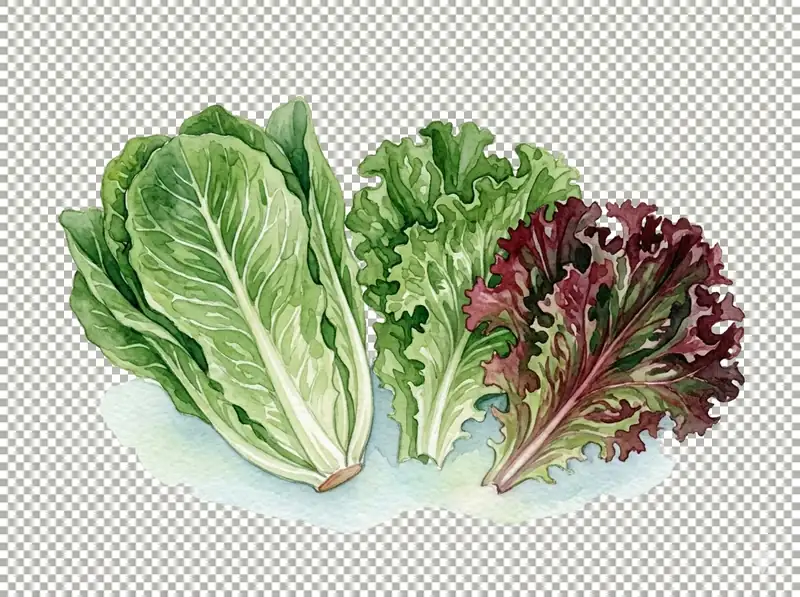
1. Romaine (cos) — the gold standard; deep green, crisp, nutritious
2. Little Gem romaine — smaller heads, equally safe, easier to toss in whole
3. Red romaine — same safety profile, higher antioxidant content from the red pigment
4. Hydroponically grown romaine — fine, just rinse as usual
Feeding Guide
Treats should make up no more than 10% of your flock's daily intake — layer pellets do the heavy lifting.
For romaine specifically, that rule is relaxed a little because it's mostly water and fiber rather than calories.
A large leaf or two per bird daily is perfectly reasonable. A whole head split among four to six birds is a fun enrichment session.
Scale back if you notice soft droppings — that's a sign they've had a bit too much watery treat.
Positive Signs
- Enthusiastic sprinting toward the treat — a classic sign of a happy, healthy flock
- Normal firm droppings even after a big serving
- Bright eyes and alert, active behavior throughout the day
- Good egg production continuing without interruption in laying hens
Negative Signs
- Very watery or loose droppings after large quantities — ease off and let the gut reset
- Disinterest in layer feed — romaine is filling the belly instead of the nutrient gap
- Any sign of respiratory distress, though this would not be caused by romaine itself
- Mold on stored leftovers — remove any uneaten greens after a few hours, especially in warm weather
Preparation Science
The outer dark green leaves of romaine contain significantly more beta-carotene and chlorophyll than the paler heart leaves — so don't throw away what looks like the scrappy bits. A quick rinse under cold water removes surface bacteria and any chemical residue without stripping any nutrition.
Enrichment Science
Chickens are natural foragers, and tearing apart a leafy green mimics the kind of exploratory pecking behavior they'd do free-ranging. Keeping that foraging instinct active reduces boredom and the pecking aggression that comes with it.
Play Ideas
Easy: Toss a whole romaine head into the run and let the flock fight over it — chaos guaranteed, no prep required.
Medium: Hang a head of romaine from a hook or rope at shoulder height so your chickens have to jump and peck to get at it.
Hard: Freeze romaine leaves into a block of ice for a summer enrichment activity — they'll peck it apart over a couple of hours and stay cool doing it.
FAQ
Q: Can I feed romaine to chicks?
A: Yes, but wait until they're at least two to three weeks old and have access to chick grit so they can digest it properly. Start with small, finely torn pieces. Baby chicks have tiny digestive systems and need their chick starter feed to do most of the work.
Q: Is iceberg lettuce okay instead of romaine?
A: It's not dangerous, but it's basically nutritional air — nearly all water and very little else. Romaine has actual vitamins. If you're going to bother tossing greens to your flock, make it count and reach for romaine.
Alternatives
- Kale: more calcium and vitamins per gram, but feed in moderation due to goitrogen content — romaine is more forgiving for daily use
- Cabbage: equally fun to hang for enrichment, slightly less hydrating, very safe — a great substitute when romaine isn't available
- Spinach: nutritious but high in oxalic acid, which binds calcium and can interfere with eggshell quality if fed too often — not a romaine replacement for daily use
- Swiss chard: similar nutrition to romaine, safe in moderate amounts, but also contains oxalic acid — best rotated rather than used as a staple
Risks & Disclaimer
Romaine lettuce is one of the safest treats you can offer backyard chickens and carries no meaningful toxicity risk. The only real concern is overfeeding to the point where it displaces their nutritionally complete layer feed — keep treats to a reasonable proportion of the daily diet and you're golden.