Quantity
A few pecks at tomato leaves are unlikely to cause a crisis in a full-sized hen, but extended access to nightshade foliage — hours of foraging in the tomato patch — can absolutely cause toxicity. The dose is cumulative over a grazing session.
Notes
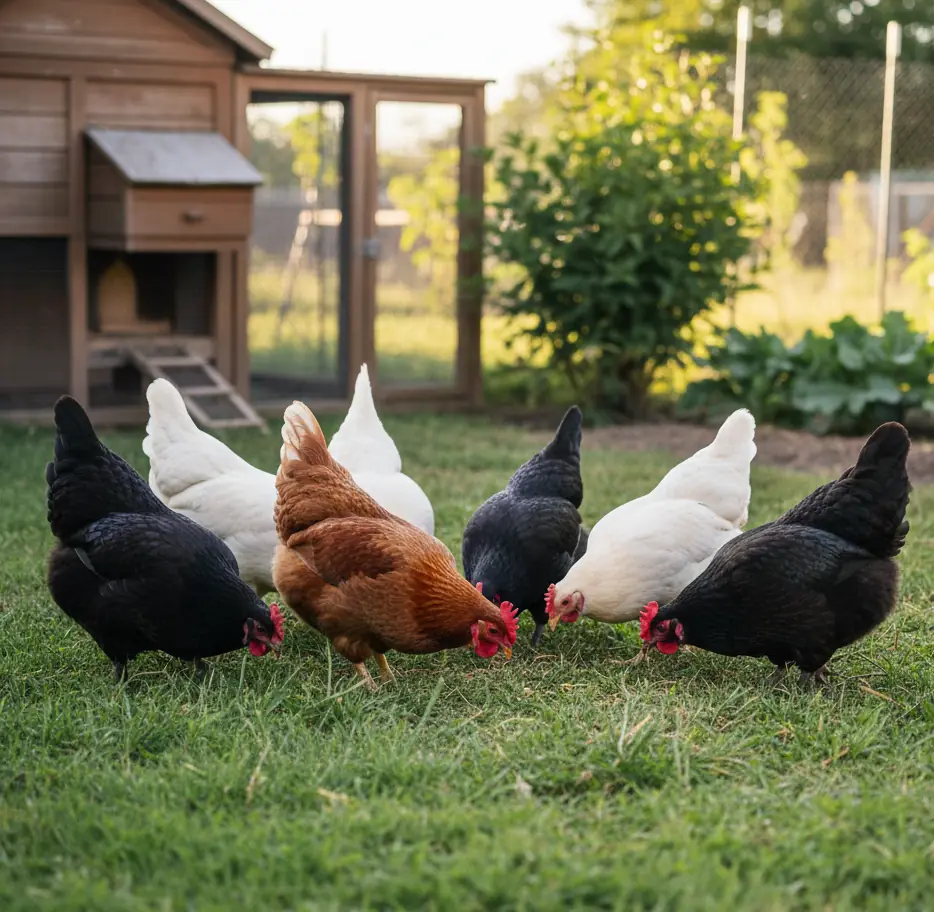
The most common scenario is free-ranging chickens with unrestricted garden access. Chickens love to scratch in the soft soil around tomato and potato plants, and they'll peck at leaves and unripe green tomatoes while they're at it. Ripe, red tomatoes are perfectly safe — it's the green parts of the plant that cause problems. Late-season garden cleanup is another risk: pulling up tomato plants and leaving the foliage where chickens can reach it.
Negative Signs
* Drooling and crop discomfort
* Diarrhea or abnormal droppings
* Lethargy and sitting hunched
* Loss of appetite
* Tremors and weakness
* Difficulty breathing in severe cases
FAQ
Q: Can chickens eat ripe tomatoes?
A: Yes. Ripe, red tomato flesh is safe for chickens and many flocks love it. The danger is in the green parts — leaves, stems, and unripe green fruit. Always remove the stem and any green spots before tossing tomatoes to your flock.
Q: Should I fence off my entire vegetable garden from my chickens?
A: If you grow nightshade family plants (tomatoes, potatoes, eggplant, peppers), fencing off the garden is the safest option. As a bonus, it protects your vegetables from being scratched up and eaten. Chickens and vegetable gardens don't mix well anyway.
Alternatives
Ripe, red tomatoes are safe and most chickens enjoy them — just remove the stem and any green bits. Ripe bell peppers (despite being nightshade family) are also safe once fully colored. It's the green plant parts and unripe fruit that are dangerous.
Risks & Disclaimer
If your chickens have been spending time in the tomato or potato garden and start showing digestive or neurological symptoms, remove garden access immediately. Contact an avian vet if symptoms are significant — especially tremors, labored breathing, or severe lethargy.