Preparation
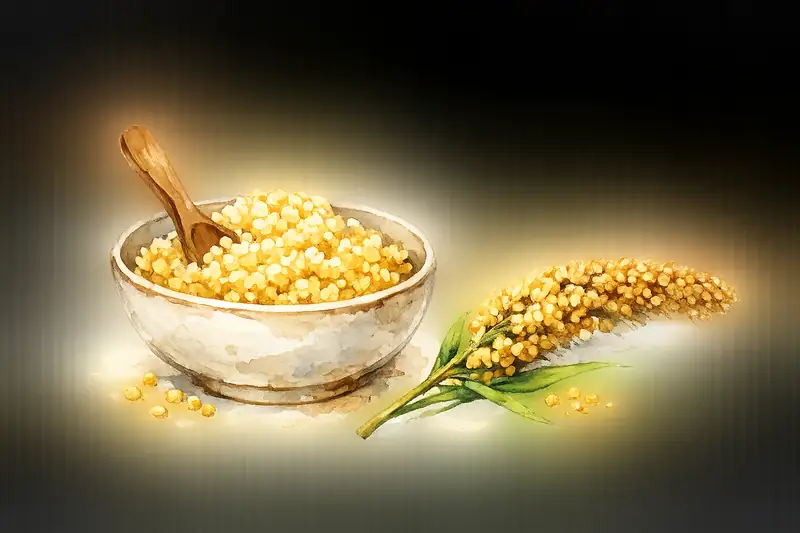
Serve it dry and raw. You can buy it loose in bags or still attached to the stem (spray millet). No prep needed, just hand it over and watch them go!
Quantity
One small spray per three birds, or a tablespoon of loose millet scattered around.
Notes
Great for taming new or shy chickens. Watch out for wild birds, if you leave millet hanging in the run, every sparrow in the neighborhood will invite themselves in!
Nutritional Benefits
* Packed with B-complex vitamins to keep their nervous system and metabolism running smoothly.
* Great source of magnesium, which helps maintain strong bones and eggshells.
* Contains complex carbohydrates for a steady, healthy release of energy.
Safe Varieties
1. Spray millet, hands down the most fun way to feed it since they have to pluck it off the stem.
2. White proso millet, the common little round seeds found in wild bird seed.
3. Red millet, slightly tougher but totally safe and nutritious.
4. Avoid old, dusty millet that has been sitting in a damp garage, it can harbor mold.
Feeding Guide
Chicks under four weeks: A tiny pinch of loose millet, it is the perfect size for chick beaks!
Pullets and young layers: Use a spray of millet to teach them to eat out of your hand.
Adult hens and roosters: Hang a few sprays around the run to keep them entertained.
Positive Signs
* Shy birds bravely approaching you to get a bite of the spray.
* Hours of quiet, focused pecking as they strip every last seed off the stems.
* Healthy, active chicks learning to forage safely.
Negative Signs
* Ignoring their formulated starter or layer feed because they want more millet.
* A massive influx of mice or wild birds if you leave uneaten sprays hanging in the coop overnight.
Preparation Science
Leaving the seeds intact in their tiny, natural hulls preserves the delicate inner oils and vitamins from oxidizing, ensuring maximum nutritional impact the moment the chicken cracks it open.
Enrichment Science
Plucking individual seeds off a dense spray stalk requires high-precision beak control and mimics the natural foraging behavior of stripping wild grasses, releasing calming endorphins.
Play Ideas
Easy: Mix loose millet into their dust bath area to encourage natural scratching.
Medium: Hold a spray of millet in your hand and sit quietly to tame a fearful bird.
Hard: Poke stems of spray millet through the hardware cloth of the run at different heights so they have to jump and stretch.
FAQ
Q: Is the millet in wild bird seed bags safe for chickens?
A: Yes, white proso millet is the main ingredient in wild bird seed and is completely safe for chickens. Just make sure the seed mix does not have anything moldy in it.
Q: Can chicks eat millet?
A: Absolutely! Because the seeds are so tiny, it is one of the safest treats for baby chicks. Just make sure you provide them with chick grit so they can digest it.
Alternatives
* Oats are larger and provide more protein, but lack the fun "plucking" experience of spray millet.
* Sunflower seeds have much higher fat and oil content, making them better for winter warmth.
* Corn gives more sheer energy but is too large for young chicks, unlike tiny millet.
Risks & Disclaimer
Millet is a fantastic, low-risk treat and arguably the best taming tool a chicken keeper can have. Just be sure to store it in an airtight container so rodents do not find it first!