Quantity
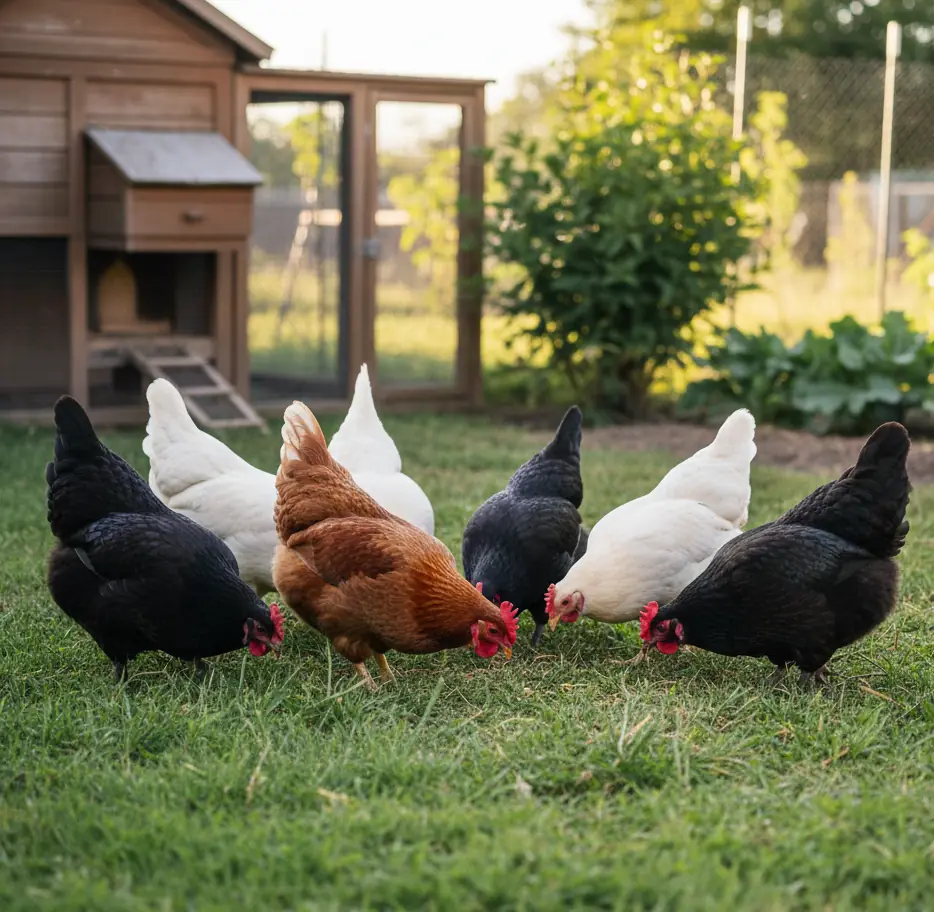
A chicken pecking at a few acorns here and there during free-ranging is unlikely to develop clinical problems. The risk comes from sustained access to large quantities — flocks that spend all day under heavy-producing oak trees during autumn. Moderation and rotation of ranging areas helps.
Notes
Autumn is the highest-risk season when acorns drop in large quantities. Chickens scratch through leaf litter under oaks and find acorns constantly. Oak leaves also contain tannins, though at lower levels than acorns. The risk is manageable — you don't need to cut down your oak trees — but you may need to fence off heavily acorn-covered areas during peak drop season or rake acorns before letting chickens out.
Negative Signs
* Decreased appetite and reduced feed intake
* Watery or bloody droppings
* Weight loss despite eating
* Lethargy and fluffed feathers
* Reduced egg production
* Kidney failure in severe cases (increased thirst, swollen abdomen)
FAQ
Q: I have oak trees in my yard. Do I need to get rid of them?
A: No — you just need to manage access during heavy acorn drop. Rake up acorns regularly, or fence off the area under the oaks during autumn. Rotating your free-range areas so chickens aren't spending all day under oaks is usually sufficient.
Alternatives
For foraging enrichment, scatter whole grains, sunflower seeds, or dried mealworms in the leaf litter instead of letting chickens rely on acorns. This satisfies their scratching instinct without the tannin risk.
Risks & Disclaimer
If your flock has been free-ranging under oak trees and you notice multiple birds showing digestive symptoms or declining condition, restrict access to the acorn-heavy areas. Contact a vet if symptoms are severe — kidney damage from tannins can be serious but is often reversible if caught early.