Preparation
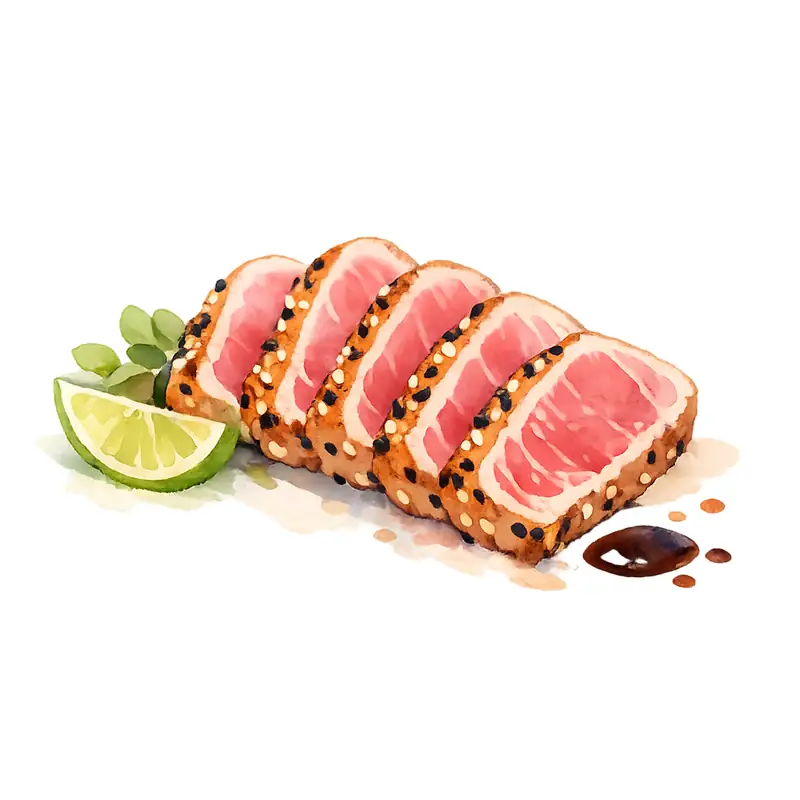
Cooked only — never raw. Canned tuna in water (no salt added) is the safest option. No oil, no brine, no seasoning. Fresh tuna must be cooked through with no bones.
Quantity
A tablespoon-sized treat once or twice a week, max. Tuna is addictive for cats and too much leads to nutritional imbalances. This is a treat, not a diet.
Notes
Tuna contains higher mercury levels than most fish — that's the main reason to limit it. Cats fed too much tuna can also develop a condition called steatitis (yellow fat disease) from vitamin E depletion. Keep it occasional and your cat stays happy and healthy.
Nutritional Benefits
* Extremely high in protein — exactly what an obligate carnivore craves and needs
* Rich in omega-3 fatty acids for healthy skin, glossy coat, and joint support
* Good source of B vitamins (especially B12 and niacin) for energy metabolism
* Contains selenium, an important antioxidant mineral
* The strong smell makes it an excellent appetite stimulant for picky eaters or cats recovering from illness
Safe Varieties
1. Canned tuna in water, no salt added — safest, most convenient everyday option
2. Canned chunk light tuna in water — lower mercury than albacore, good budget choice
3. Fresh tuna steak, cooked plain (baked or poached) — great for a special treat
4. Canned albacore in water — higher mercury than chunk light; use less frequently
5. Tuna in oil or brine — too much fat or sodium; avoid or rinse very thoroughly
Feeding Guide
One tablespoon of flaked tuna is plenty per treat session.
Once or twice a week maximum — even if your cat stages a dramatic protest for more.
Kittens can have tiny tastes (half a teaspoon), but it shouldn't become a habit.
Cats with kidney disease or hyperthyroidism should skip tuna entirely — check with your vet.
Positive Signs
* Instant excitement — the can-opening radar is a sign of a healthy, food-motivated cat
* Eats eagerly and returns to normal behavior afterward
* Coat stays glossy and skin stays smooth with occasional omega-3 intake
* No digestive upset — normal litter box activity the next day
Negative Signs
* Refusing regular food and holding out for tuna — classic tuna addiction behavior; cut back immediately
* Vomiting or diarrhea — could be too rich or a sensitivity; try a smaller amount next time
* Lethargy or muscle weakness over time — could signal mercury accumulation or nutritional imbalance from too much tuna
* Yellowing of the skin or fat deposits — rare but a sign of steatitis; stop tuna and see your vet
Preparation Science
Mercury in tuna is methylmercury, which accumulates in the body over time and isn't removed by cooking. That's why portion control matters more than preparation method. Cooking does eliminate parasites and bacteria from fresh tuna, making it safe — just don't expect heat to reduce the mercury.
Enrichment Science
The potent smell of tuna activates a cat's vomeronasal organ (the same one that processes catnip), which is why tuna drives cats absolutely wild. Using tiny amounts as a high-value reward taps into their deepest predatory food-seeking instincts.
Play Ideas
Easy: Smear a tiny bit of tuna water on a lick mat for a five-minute flavor adventure.
Medium: Hide small flakes of tuna inside a puzzle feeder — your cat will work overtime to get every last morsel.
Hard: Freeze a teaspoon of tuna flakes in water in an ice cube tray — a slow-release treat that doubles as a hot-day cooler.
FAQ
Q: My cat only wants tuna and won't eat regular food anymore. What do I do?
A: You've got a tuna addict — it happens. Go cold turkey (ironically). Stop offering tuna entirely for two weeks and only provide their balanced cat food. They'll protest loudly, possibly dramatically, but they won't starve themselves. Once they're eating normally again, reintroduce tuna very sparingly as an occasional treat only.
Q: Is canned tuna for humans safe for cats?
A: Yes, as long as it's packed in water with no salt added. Regular canned tuna has too much sodium for cats. Always check the label — the ingredient list should basically just say "tuna" and "water."
Alternatives
* Salmon — lower mercury, similar omega-3 profile, and most cats love it just as much; the better long-term fish choice
* Sardines (in water) — tiny fish means very low mercury, high omega-3s, and most cats go crazy for them
* Chicken — much leaner, zero mercury risk, and great for everyday protein treats; less exciting to cats but safer in quantity
* Shrimp — low calorie, high protein, fun texture; a good occasional treat without the addiction risk
Risks & Disclaimer
Tuna is safe as an occasional treat but should never become a dietary staple. Mercury accumulates over time, and too much tuna can lead to nutritional imbalances or steatitis. Keep it to once or twice a week and your cat gets all the joy with none of the risk.