Preparation
Remove seeds and stem. Cook or finely chop.
Quantity
1 small bite occasionally.
Notes
Only sweet varieties, never spicy peppers.
Nutritional Benefits
* Contains vitamin C.
* Adds plant variety.
* Low calorie.
* Mild fiber.
Safe Varieties
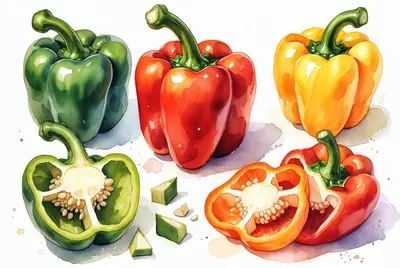
1. Red bell pepper cooked — usually most palatable.
2. Yellow bell pepper cooked — also good.
3. Green bell pepper cooked — slightly less sweet.
4. Raw bell pepper — small amounts only.
Feeding Guide
Kittens: almost none.
Adult cats: tiny occasional bite.
Senior cats: soft cooked piece.
Positive Signs
* No digestive upset.
* Curious sniffing.
* Normal stool.
Negative Signs
* Vomiting → stop.
* Gas → reduce.
* Refusal → skip.
Preparation Science
Cooking softens plant walls and improves sweetness perception.
Enrichment Science
Color and scent variation adds sensory interest without dietary pressure.
Play Ideas
Easy: Mix tiny pepper bits into food.
Medium: Hide pepper inside meat mash.
Hard: Freeze pepper puree dots.
FAQ
Q: Are spicy peppers safe?
A: No. Capsaicin irritates cats.
Q: Do cats like bell peppers?
A: Some are curious, many are neutral.
Alternatives
* Pumpkin is more digestion friendly.
* Carrot is sweeter.
* Zucchini is more watery.
* Green beans are more filling.
Risks & Disclaimer
Bell pepper is a colorful visitor, not a diet foundation.