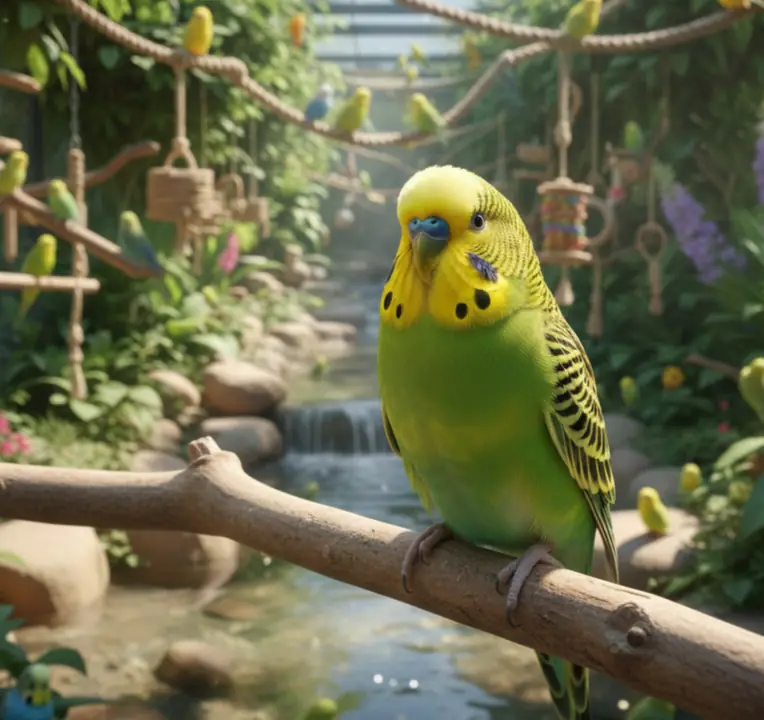
A protein-loaded recovery formula for the two worst weeks on your budgie's calendar — when they look like a pillow fight and feel like a grudge.
1. The night before: Put your hulled millet in a small jar, cover with water, and leave it on the counter. Set a timer for 6 hours, then drain, rinse, and leave the damp seeds in the jar with a cheesecloth over the top. By morning, you should see little white tails — your seeds are alive and packed with bioavailable nutrients.
2. Hard-boil your egg. Cool it under running water, peel it, and crumble one quarter into a small bowl. Go fine — budgie beaks are precise instruments, and big chunks get ignored.
3. Grate your carrot into airy threads and chop the dandelion greens into the tiniest pieces you can manage. Toss both into the bowl with the egg.
4. Add the sprouted millet and fold everything together gently — you're not making a paste, you're making a treasure map. Every forkful should look different.
5. Sprinkle the dry chia seeds over the top like tiny black jewels. Serve immediately in a shallow dish.
First thing in the morning, when energy demand is highest
Molting is metabolically brutal. Your budgie is building an entire new wardrobe from scratch, feather by feather, and their body is screaming for sulfur-rich amino acids, B vitamins, and easily digestible protein. The Molt Hotel checks them in for a rest and hands them everything they need to check out looking spectacular.
Start serving the moment you see pin feathers emerging or the cage bottom starts looking like a tiny crime scene of lost fluff. Continue daily through the entire molt cycle (typically 10-14 days).
A soft, damp mound of sprouted seeds threaded with bright orange carrot shreds and tiny flecks of crumbled egg. It glistens slightly and smells alive — earthy and fresh. Your budgie will plant their face in it and not come up for air. The sprouted seeds have little white tails poking out, and the whole thing looks like a miniature garden on a plate.
This won't speed up the molt itself — that's hormonal and on your budgie's own timeline. It supports the process, but they're still going to look like a disheveled professor for a bit.
New feathers should emerge smoother and shinier within 7-10 days. Full coat recovery depends on the individual bird, but you'll notice less "stress bars" on incoming feathers after one full molt cycle with this formula.
- Sprouted seeds spoil fast. Remove any uneaten portion after 2 hours max — bacterial growth in warm, damp food is the number one food safety risk for birds.
- Make sure the hard-boiled egg is fully cooked through (no runny yolk). Undercooked egg can carry salmonella, and a molting budgie's immune system is already working overtime.
- If using dandelion greens from outdoors, triple-wash them. Pesticide exposure during a molt can cause feather deformities in incoming plumage.
Easy: Serve the mix in a clean bottle cap or shallow shell — the tiny "plate" makes your budgie feel like they're dining at a restaurant.
Medium: Spread the mixture thinly across a clean ceramic tile and let your budgie forage across the surface, picking their favorite bits like a tiny art critic at a buffet.
Hard: Fill a small wiffle ball with the mix (push it through the holes) and hang it from the cage ceiling — your molting budgie gets a gentle workout reaching for high-protein bites.
- Start this recipe 2-3 days before the heavy molt hits if you can read the early signs (extra preening, a few feathers on the cage floor). Getting ahead of the protein demand makes a noticeable difference.
- Your budgie might be grumpy and nippy during a molt — those pin feathers are itchy and sore. Don't take it personally. Just keep serving the food and giving them space.
- If they refuse to eat the egg at first, mix it with a tiny bit of their regular seed to create a "gateway" blend. Once they taste it, they'll seek it out.
- You'll know this recipe is working when the new feathers come in tight, smooth, and without the horizontal "stress bars" that indicate nutritional gaps.
- Keep a molt calendar on your fridge. Budgies typically molt 1-2 times per year, and knowing when it's coming lets you prep the sprouting jar in advance.